
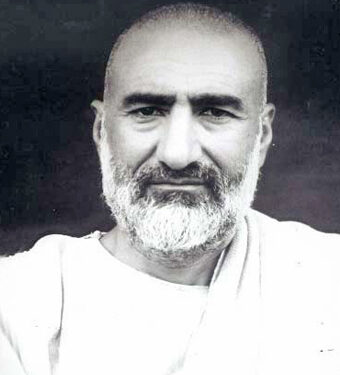
Abdul Ghaffar Khan
Abdul Ghaffar Khan was a Pashtun independence activist against British rule in India. Born February 6, 1890, in Hashtnagar. Died January 20, 1988, in Peshawar. Positions held include Member of the Constituent Assembly of India (1946–), member of the House Committee of the Constituent Assembly of India (1946–) and Member of the Advisory Committee of the Constituent Assembly of India (1947–). Educated at Aligarh Muslim University. Awards include Jawaharlal Nehru Award for International Understanding and Bharat Ratna.
Facts
23 facts · 2 confirmed by two sources · 6 cited · 15 from one source
Where this comes from
Papalocal keeps its own record. It started from these sources; what each one said is kept here as it was copied, so a change on their side never changes this page by itself. Tap one to read its version.
What Wikidata says · copied November 16, 2026 · revision 2568884832
- Described as
- Pashtun independence activist against British rule in India
- Other names
- Fakhr-e-Afghān, Bādshāh Khān, Frontier Gandhi
- Born
- February 6, 1890 · 2 references
- Died
- January 20, 1988 · 2 references
- Born in
- Hashtnagar
- Died in
- Peshawar · 1 reference
- Buried in
- Jalalabad
- Citizen of
- Afghanistan; British Raj; Pakistan
- Occupation
- politician · 1 reference; freedom fighter
- Positions held
- Member of the Constituent Assembly of India (1946–) · 1 reference; member of the House Committee of the Constituent Assembly of India (1946–); Member of the Advisory Committee of the Constituent Assembly of India (1947–) · 1 reference
- Education
- Aligarh Muslim University
- Awards
- Jawaharlal Nehru Award for International Understanding (1967) · 1 reference; Bharat Ratna (1987)
- Spouse
- Meharqanda Kinankhel (1912–); Nambata Kinankhel
- Children
- Khan Abdul Wali Khan · 1 reference; Khan Abdul Ali Khan; Khan Abdul Ghani Khan · 1 reference
- Siblings
- Khan Sahib
- Religion
- Islam
- Wikipedias with a page
- 52
Wikidata item Q312966 (wikidata.org/wiki/Q312966), public domain (CC0). Copied November 16, 2026.
What Wikipedia says · copied November 16, 2026 · revision 1385226082
Khan Abdul Ghaffar Khan (6 February 1890 – 20 January 1988), also known as Bacha Khan and Badshah Khan, was an Indian independence activist from the North-West Frontier Province, and founder of the Khudai Khidmatgar resistance movement against British rule in colonial India. After the partition occurred, he became a Pakistani politician and led the Azad Party.
He was a political and spiritual leader known for his nonviolent opposition and lifelong pacifism; he was a devout Muslim and an advocate for Hindu–Muslim unity in the subcontinent. Because of his similar ideology and close friendship with Mahatma Gandhi, Khan was nicknamed "the Frontier Gandhi" (سرحدی گاندھی, Sarhadi Gandhi). In 1929, Khan founded the Khudai Khidmatgar, an anti-colonial nonviolent resistance movement. The Khudai Khidmatgar's success and popularity eventually prompted the colonial government to launch numerous crackdowns against Khan and his supporters; the Khudai Khidmatgar experienced some of the most severe repression of the entire Indian independence movement.
Khan strongly opposed the proposal for the partition of India into the Muslim-majority Dominion of Pakistan and the Hindu-majority Dominion of India, and consequently sided with the pro-union Indian National Congress and All-India Azad Muslim Conference against the pro-partition All-India Muslim League. When the Indian National Congress reluctantly declared its acceptance of the partition plan without consulting the Khudai Khidmatgar leaders, he felt deeply betrayed, telling the Congress leaders "you have thrown us to the wolves." In June 1947, Khan and other Khudai Khidmatgar leaders formally issued the Bannu Resolution to the British authorities, demanding that the ethnic Pashtuns be given a choice to have an independent state of Pashtunistan, which was to comprise all of the Pashtun territories of British India and not be included (as almost all other Muslim-majority provinces were) within the state of Pakistan—the creation of which was still underway at the time. However, the British government refused the demands of this resolution. In response, Khan and his elder brother, Abdul Jabbar Khan, boycotted the 1947 North-West Frontier Province referendum on whether the province should be merged with India or Pakistan, objecting that it did not offer options for the Pashtun-majority province to become independent.
After the partition of India by the British government, Khan pledged allegiance to the newly created nation of Pakistan, and stayed in the now-Pakistani North-West Frontier Province; he was frequently arrested by the Pakistani government between 1948 and 1954. In 1956, he was again arrested for his opposition to the One Unit program, under which the government announced its plan to merge all the provinces of West Pakistan into a single unit to match the political structure of erstwhile East Pakistan (present-day Bangladesh). Khan was jailed or in exile during some years of the 1960s and 1970s. He was awarded Bharat Ratna, India's highest civilian award, by the Indian government in 1987.
Following his will upon his death in Peshawar in 1988, he was buried at his house in Jalalabad, Afghanistan. Tens of thousands of mourners attended his funeral including Afghan President Mohammad Najibullah, marching through the Khyber Pass from Peshawar towards Jalalabad. It was marred by two bomb explosions that killed 15 people; despite the heavy fighting at the time due to the Soviet–Afghan War, both sides, namely the Soviet–Afghan government coalition and the Afghan mujahideen, declared an immediate ceasefire to allow Khan's burial. He was given military honours by the Afghan government.
- Born, in its opening lines
- February 6, 1890
- Died, in its opening lines
- January 20, 1988
From the Wikipedia article “Abdul Ghaffar Khan” (en.wikipedia.org/wiki/Abdul_Ghaffar_Khan), by its contributors, under CC BY-SA 4.0 (creativecommons.org/licenses/by-sa/4.0/). Copied November 16, 2026; not changed.
Confirmed Two sources agree. Cited One source, and it names where it got it. One source One source, without a reference of its own. Sources disagree The sources disagree. We show the best-supported value and keep theirs below.
