
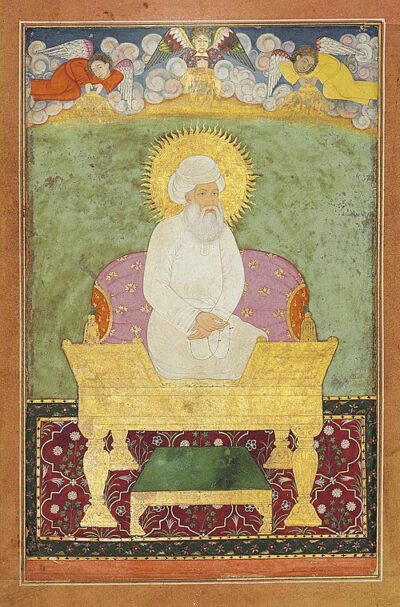
Abdul Qadir Gilani
Abdul Qadir Gilani was a Sunni Muslim preacher, mystic and jurist. Born 1078, in Gilan Province. Died February 14, 1166, in Baghdad. Known for Futuh al-Ghayb, Al-Ghunya and Al-Fuyudat al-Rabbaniyya.
Facts
18 facts · 0 confirmed by two sources · 3 cited · 15 from one source
Where this comes from
Papalocal keeps its own record. It started from these sources; what each one said is kept here as it was copied, so a change on their side never changes this page by itself. Tap one to read its version.
What Wikidata says · copied November 16, 2026 · revision 2568771594
- Described as
- Sunni Muslim preacher, mystic and jurist (1078–1166)
- Other names
- Abdul Qadir Jilani, Abd al-Qadir al-Djilani, Abd al-Qadir al-Jilani, Sheikh Abdul Qadir Jilani, Abd Al-Qadir Al-Jilani, Abd al-Qadir Jilani, Abdul Qadir al-Jilani, Abdul Qadir Djilani, Abdul Qadir al-Djilani, Abdul Qadir Kaylani, Abd al-Qadir Djilani, Abd al-Qadir Kaylani
- Born
- 1078
- Died
- February 14, 1166
- Born in
- Gilan Province
- Died in
- Baghdad · 1 reference
- Citizen of
- Abbasid Caliphate
- Occupation
- Islamic jurist; theologian · 1 reference; legal scholar · 1 reference
- Known for
- Futuh al-Ghayb; Al-Ghunya; Al-Fuyudat al-Rabbaniyya; Al-Fath Ar-Rabbani
- Field
- Sufism; fiqh
- Children
- Abdul Razzaq Gilani
- Father
- Abu Saleh
- Religion
- Islam; Sunni Islam
- Wikipedias with a page
- 64
Wikidata item Q307365 (wikidata.org/wiki/Q307365), public domain (CC0). Copied November 16, 2026.
What Wikipedia says · copied November 16, 2026 · revision 1379913171
Abd al-Qadir al-Gilani (c. 1077 or 1078 – c. 1166), was a Persian Hanbali jurist, preacher, and Sufi mystic leader based in Baghdad. He is regarded as the eponym and founding figure of the Qadiriyya, one of the oldest Sufi orders. He is also known by the honorific Muhyi al-Dīn (Reviver of the Faith), and in later Sufi tradition, by the titles including Gawth al-Azam (the Greatest Succour) denoting his higher status among the Sufi saints.
Gilani spent most of his adult life in Baghdad, where he studied Islamic jurisprudence and hadith, taught at a madrasa, and became known for his sermons on religious observances, ethical conduct and spiritual discipline. His reputation as a religious authority grew during the later part of his life, while accounts of his spiritual powers and elevated spiritual status became prominent in later hagiographical literature.
From the Wikipedia article “Abdul Qadir Gilani” (en.wikipedia.org/wiki/Abdul_Qadir_Gilani), by its contributors, under CC BY-SA 4.0 (creativecommons.org/licenses/by-sa/4.0/). Copied November 16, 2026; not changed.
Confirmed Two sources agree. Cited One source, and it names where it got it. One source One source, without a reference of its own. Sources disagree The sources disagree. We show the best-supported value and keep theirs below.
