
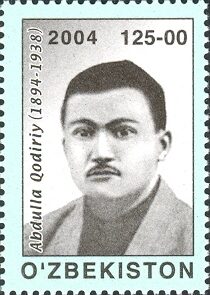
Abdulla Qodiriy
Abdulla Qodiriy was an Uzbek and Soviet poet, literary translator, and writer. Born April 10, 1894, in Tashkent. Died October 4, 1938, in Tashkent. Awards include Order of "Mustakillik".
Facts
13 facts · 2 confirmed by two sources · 2 cited · 9 from one source
Where this comes from
Papalocal keeps its own record. It started from these sources; what each one said is kept here as it was copied, so a change on their side never changes this page by itself. Tap one to read its version.
What Wikidata says · copied November 18, 2026 · revision 2567849424
- Described as
- Uzbek and Soviet poet, literary translator, and writer (1894–1938)
- Other names
- Abdulla Qadiri, Julqunboy
- Born
- April 10, 1894 · 1 reference
- Died
- October 4, 1938
- Born in
- Tashkent · 1 reference
- Died in
- Tashkent
- Buried in
- Tashkent
- Citizen of
- Russian Empire; Soviet Union
- Occupation
- translator; poet; journalist; novelist; writer · 2 references
- Awards
- Order of "Mustakillik" (1994) · 1 reference
- Wikipedias with a page
- 20
Wikidata item Q2427335 (wikidata.org/wiki/Q2427335), public domain (CC0). Copied November 18, 2026.
What Wikipedia says · copied November 18, 2026 · revision 1370517550
Abdulla Qodiriy (April 10, 1894 – October 4, 1938) was an Uzbek playwright, poet, writer, and literary translator. Qodiriy was one of the most influential Uzbek writers of the 20th century. He introduced realism into Uzbek literature through his historical novels and influenced many other Central Asian novelists.
Qodiriy wrote under various pen names, the most renowned being Julqunboy. His early works were influenced by the Jadid movement. Qodiriy was executed during the Great Purge under Joseph Stalin.
- Born, in its opening lines
- April 10, 1894
- Died, in its opening lines
- October 4, 1938
From the Wikipedia article “Abdulla Qodiriy” (en.wikipedia.org/wiki/Abdulla_Qodiriy), by its contributors, under CC BY-SA 4.0 (creativecommons.org/licenses/by-sa/4.0/). Copied November 18, 2026; not changed.
Confirmed Two sources agree. Cited One source, and it names where it got it. One source One source, without a reference of its own. Sources disagree The sources disagree. We show the best-supported value and keep theirs below.
