
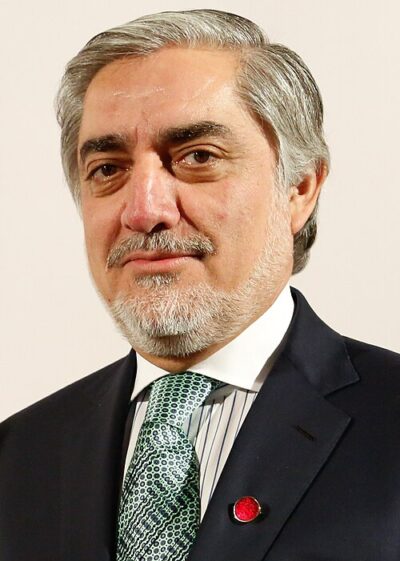
Abdullah Abdullah
Abdullah Abdullah is an Afghan politician. Born September 5, 1960, in Kabul. Positions held include Minister of Foreign Affairs of Afghanistan (2001–2006) and Chief Executive Officer of Afghanistan (2014–2021). Educated at Kabul University of Medical Sciences and Kabul University. Awards include medal for the 25 years of Kazakhstan's independence.
Facts
14 facts · 0 confirmed by two sources · 3 cited · 10 from one source · 1 where the sources disagree
What’s different
- Born: we show September 5, 1960 (Sources disagree). Wikipedia says February 10, 1960
Where this comes from
Papalocal keeps its own record. It started from these sources; what each one said is kept here as it was copied, so a change on their side never changes this page by itself. Tap one to read its version.
What Wikidata says · copied November 16, 2026 · revision 2567400451
- Described as
- Afghan politician
- Other names
- Dr. Abdullah
- Born
- September 5, 1960 · 1 reference
- Born in
- Kabul · 1 reference
- Citizen of
- Afghanistan
- Occupation
- politician · 1 reference; ophthalmologist; diplomat; physician · 1 reference
- Positions held
- Minister of Foreign Affairs of Afghanistan (2001–2006) · 1 reference; Chief Executive Officer of Afghanistan (2014–2021)
- Political party
- National Coalition of Afghanistan
- Education
- Kabul University of Medical Sciences; Kabul University
- Awards
- medal for the 25 years of Kazakhstan's independence
- Religion
- Islam
- Wikipedias with a page
- 50
Wikidata item Q317556 (wikidata.org/wiki/Q317556), public domain (CC0). Copied November 16, 2026.
What Wikipedia says · copied November 16, 2026 · revision 1385331820
Abdullah Abdullah (Pashto; Dari: عبدالله عبدالله, born Abdullah; 10 February 1960) is an Afghan politician who led the High Council for National Reconciliation (HCNR) from May 2020 until August 2021, when the Afghan government was overthrown by the Taliban. The council had been established to facilitate peace talks between the Islamic Republic of Afghanistan and the Taliban insurgents. Abdullah was the Chief Executive of Afghanistan from September 2014 to March 2020, and as Minister of Foreign Affairs from December 2001 to April 2005. Prior to that, he was a senior member of the Northern Alliance, working as an adviser to Ahmad Shah Massoud. He worked as an ophthalmologist and medical doctor in the 1980s.
Abdullah ran against President Hamid Karzai in the 2009 Afghan presidential election, coming second with 30.5% of the total votes. In 2010, he created the Coalition for Change and Hope which became the National Coalition of Afghanistan in 2011 and is one of the leading democratic opposition movements in Afghanistan. He ran again in the 2014 presidential election and went to the second round with 45% the total vote. His closest rival, Ashraf Ghani, had secured 35% of the total vote. Due to signs of fraud, the results of the second round were heavily contested and led to a deadlock. Despite the controversy regarding the results of the second round of elections, the final certified result by the Independent election commission of Afghanistan shows that Ashraf Ghani received 55.3% of the votes while Abdullah Abdullah secured 44.7% of the vote. After months of talks and US mediation, the two candidates established a national unity government in which Abdullah was the Chief Executive of Afghanistan.
Following the collapse of the Islamic Republic of Afghanistan on 17 August 2021, leader of the Taliban-affiliated Hezb-e-Islami party Gulbuddin Hekmatyar met with Abdullah and Karzai in Doha, seeking to form a government. Reports emerged on 25 August that a 12-member council will be formed to govern the de facto newly reinstated Afghanistan. Reportedly 7 members were already agreed upon: Abdullah himself, Karzai, Hekmatyar, Abdul Ghani Baradar, Mullah Yaqoob, Khalil-ur-Rehman Haqqani, and Haneef Atmar. However, it was later announced that Abdullah Abdullah and Karzai had failed to secure roles in the new government.
- Born, in its opening lines
- February 10, 1960
From the Wikipedia article “Abdullah Abdullah” (en.wikipedia.org/wiki/Abdullah_Abdullah), by its contributors, under CC BY-SA 4.0 (creativecommons.org/licenses/by-sa/4.0/). Copied November 16, 2026; not changed.
Confirmed Two sources agree. Cited One source, and it names where it got it. One source One source, without a reference of its own. Sources disagree The sources disagree. We show the best-supported value and keep theirs below.
