
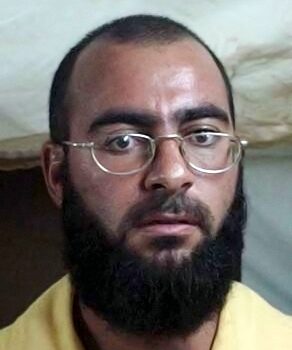
Abu Bakr al-Baghdadi
Abu Bakr al-Baghdadi was a Leader of the Islamic State. Born July 28, 1971, in Samarra. Died October 27, 2019, in Idlib. Positions held include Caliph of the Islamic State (2014–2019). Educated at University of Baghdad.
Facts
29 facts · 2 confirmed by two sources · 9 cited · 17 from one source · 1 where the sources disagree
What’s different
- Died in: we show Idlib (Sources disagree). Wikidata also lists Barisha
Where this comes from
Papalocal keeps its own record. It started from these sources; what each one said is kept here as it was copied, so a change on their side never changes this page by itself. Tap one to read its version.
What Wikidata says · copied November 16, 2026 · revision 2568289760
- Described as
- Leader of the Islamic State (1971-2019)
- Other names
- Abu Dua, Ibrahim Awwad Ibrahim Ali al-Badri, Dr. Ibrahim, Ibrahim Awwad Ibrahim Ali al-Badri al-Samarrai, Al-Baghdadi, Abu Bakr, Caliph Ibrahim, Abu Du'a
- Born
- July 28, 1971
- Died
- October 27, 2019 · 1 reference
- Born in
- Samarra · 1 reference
- Died in
- Barisha; Idlib · 1 reference
- Cause of death
- suicide bombing · 1 reference
- Name at birth
- إبراهيم عواد إبراهيم علي البدري السامرائي
- Citizen of
- Ba'athist Iraq (1971–2004); statelessness (2004–2019)
- Occupation
- imam · 1 reference; military leader; rapist; condottiero; terrorist; preacher · 1 reference
- Positions held
- Caliph of the Islamic State (2014–2019)
- Political party
- Islamic State · 1 reference
- Education
- University of Baghdad (2002–2006)
- Member of
- Islamic State of Iraq (2006–2013); Islamic State (2013–2019); Islamic State Province of Syria (2018–2019)
- Spouse
- Saja al-Dulaimi · 1 reference; Umm Hudayfa · 1 reference
- Children
- Umaima al-Baghdadi · 1 reference; Hudhaifa al-Badri · 1 reference
- Siblings
- Rasmiya Awad · 1 reference; Abu al-Hasan al-Hashimi al-Qurashi · 1 reference
- Religion
- Islam
- Military branch
- military of the Islamic State
- Military rank
- Amir
- Wikipedias with a page
- 97
Wikidata item Q2821724 (wikidata.org/wiki/Q2821724), public domain (CC0). Copied November 16, 2026.
What Wikipedia says · copied November 16, 2026 · revision 1381972879
Ibrahim Awwad Ibrahim Ali al-Badri (28 July 1971 – 27 October 2019), commonly known by his nom de guerre Abu Bakr al-Baghdadi, was an Iraqi militant leader and former teacher who was the founder and first leader of the Islamic State (IS), who proclaimed himself caliph in 2014 and stayed in power until his suicide in an American military operation in 2019.
Baghdadi was born in Samarra and obtained graduate degrees in Islamic theology in the late 1990s and 2000s. According to supporters, he obtained a PhD at the Islamic University of Baghdad. Following the American invasion of Iraq in March 2003, Baghdadi led the "Jama'at Jaysh Ahl al-Sunna wal-Jama'ah" insurgent group in Iraq and was detained with al-Qaeda commanders at the American Camp Bucca in 2004. His group joined the Mujahideen Shura Council (MSC) coalition in 2006 and fought alongside al-Qaeda in Iraq. Upon the dissolution of the MSC in October 2006, Baghdadi became a leading member of the newly established Islamic State of Iraq organization, and rose through the group's ranks until he was appointed its emir, the highest leader, in 2010. In March 2013, the group renamed itself as the "Islamic State of Iraq and Levant" (ISIL), announcing its intention to expand into Syria and forcibly assimilate the Al-Nusra Front, leading to a conflict with al-Qaeda's general command. In June 2014, the group once again re-designated itself as the "Islamic State", and declared itself to be a caliphate. Baghdadi was chosen caliph of the Islamic State by a "Shura Council", which represented those members of the Islamic State allegedly qualified to elect a caliph.
IS was designated as a terrorist organisation by the United Nations and almost all sovereign states, and Baghdadi was individually considered a terrorist by the United States and many other countries. As leader of IS, Baghdadi led the Islamic State's wars against Iraq and Syria. Baghdadi directed the use of tactics including the mass use of suicide bombings and the execution of prisoners of war. IS briefly captured substantial territory in Iraq and Syria, but lost all of that territory and almost all of its fighters during Baghdadi's tenure as caliph. Baghdadi would become directly involved in IS's atrocities and human rights violations. These include the genocide of Yazidis in Iraq, extensive sexual slavery, organized rape, floggings, and systematic executions. He directed terrorist activities and massacres. He embraced brutality as part of the organization's propaganda efforts, producing videos displaying sexual slavery and executions via hacking, stoning and burning. Baghdadi himself kept several personal sex slaves.
On 27 October 2019, Baghdadi killed himself and two children by detonating a suicide vest during the Barisha raid, conducted by the United States following approval from President Donald Trump, in Syria's northwestern Idlib Province. After being offered Islamic funeral rites, his body was buried at sea. IS confirmed his death and named Abu Ibrahim al-Hashimi al-Qurashi as his replacement.
- Born, in its opening lines
- July 28, 1971
- Died, in its opening lines
- October 27, 2019
From the Wikipedia article “Abu Bakr al-Baghdadi” (en.wikipedia.org/wiki/Abu_Bakr_al-Baghdadi), by its contributors, under CC BY-SA 4.0 (creativecommons.org/licenses/by-sa/4.0/). Copied November 16, 2026; not changed.
Confirmed Two sources agree. Cited One source, and it names where it got it. One source One source, without a reference of its own. Sources disagree The sources disagree. We show the best-supported value and keep theirs below.
