
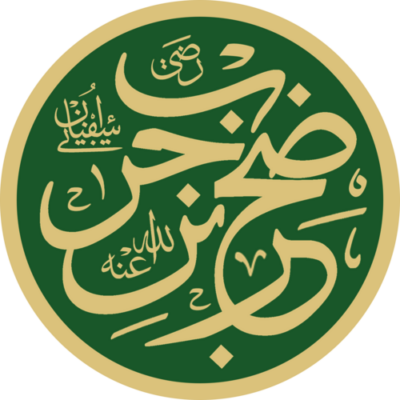
Abu Sufyan ibn Harb
Abu Sufyan ibn Harb was a Quraysh tribal leader and merchant (c. 560 – 653). Born 570, in Mecca. Died 650, in Medina.
Facts
26 facts · 0 confirmed by two sources · 1 cited · 23 from one source · 2 where the sources disagree
What’s different
- Born: we show 570 (Sources disagree). Wikipedia says 560
- Died: we show 650 (Sources disagree). Wikidata also lists 640
Where this comes from
Papalocal keeps its own record. It started from these sources; what each one said is kept here as it was copied, so a change on their side never changes this page by itself. Tap one to read its version.
What Wikidata says · copied November 16, 2026 · revision 2550595557
- Described as
- Quraysh tribal leader and merchant (c. 560 – 653)
- Other names
- Sakhr ibn Harb ibn Umayya
- Born
- 570 · 1 reference
- Died
- 640; 650 · 1 reference; 650
- Born in
- Mecca · 1 reference
- Died in
- Medina
- Buried in
- Al-Baqi'
- Occupation
- merchant; companions of the Prophet · 1 reference
- Spouse
- Hind bint Utbah; Zaynab bint Nawfal; Safiyyah bint Abi al-As
- Children
- Mu'awiya I; Yazid ibn Abi Sufyan; Utba ibn Abi Sufyan; Amr ibn Abi Sufyan; Anbasa ibn Abi Sufyan; Hanzala ibn Abi Sufyan; Juwayriya bint Abi Sufyan; Al-Fari'ah bint Abi Sufyan; Umayma bint Abi Sufyan; Hind bint Abi Sufyan; Izza bint Abi Sufyan; Ziyad ibn Abihi
- Father
- Harb ibn Umayya
- Siblings
- Al-Harith ibn Harb; Umm Jamil
- Religion
- Islam (630–)
- Wikipedias with a page
- 53
Wikidata item Q335430 (wikidata.org/wiki/Q335430), public domain (CC0). Copied November 16, 2026.
What Wikipedia says · copied November 16, 2026 · revision 1383919335
Abu Sufyan (Arabic: أبو سفيان; c. 560–653), was a prominent opponent-turned-companion and father-in-law of the Islamic prophet Muhammad. He was the father of the first Umayyad caliph Mu'awiya I (r. 661–680) and namesake of the Sufyanid line of Umayyad caliphs which ruled from 661 to 684.
Abu Sufyan was a leader and merchant from the Quraysh tribe of Mecca. During his early career, he often led trade caravans to Syria. He had been among the main leaders of Meccan opposition to Muhammad, the prophet of Islam, commanding the Meccans at the battles of the Uhud and Trench in 625 and 627 CE. However, when Muhammad entered Mecca in 630, he was among the first to submit and was given a stake in the nascent Muslim state, playing a role at the Battle of Hunayn and the subsequent destruction of the polytheistic sanctuary of al-Lat in Ta'if. After Muhammad's death, he may have been appointed as the governor of Najran by Caliph Abu Bakr (r. 632–634) for an unspecified period. Abu Sufyan later played a supporting role in the Muslim army at the Battle of the Yarmuk against the Byzantines in Syria. His sons Yazid and later Mu'awiya were given command roles in that province and the latter went on to establish the Umayyad Caliphate in 661.
- Born, in its opening lines
- 560
- Died, in its opening lines
- 653
From the Wikipedia article “Abu Sufyan” (en.wikipedia.org/wiki/Abu_Sufyan), by its contributors, under CC BY-SA 4.0 (creativecommons.org/licenses/by-sa/4.0/). Copied November 16, 2026; not changed.
Confirmed Two sources agree. Cited One source, and it names where it got it. One source One source, without a reference of its own. Sources disagree The sources disagree. We show the best-supported value and keep theirs below.
