
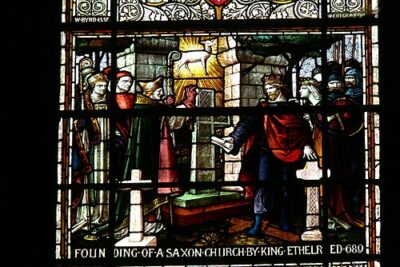
Æthelred of Mercia
Æthelred of Mercia was a King of Mercia. Born 7th century. Died 8th century, in Bardney Abbey. Positions held include King of Mercia (675–704).
Facts
18 facts · 0 confirmed by two sources · 2 cited · 16 from one source
Where this comes from
Papalocal keeps its own record. It started from these sources; what each one said is kept here as it was copied, so a change on their side never changes this page by itself. Tap one to read its version.
What Wikidata says · copied November 17, 2026 · revision 2553928709
- Described as
- King of Mercia
- Other names
- King Aethelred of Mercia, Ethelred of Mercia, Aethelred of Mercia, Æþelred of Mercia, AEthelred of Mercia, Aethelred of Mercla
- Born
- 7th century · 1 reference
- Died
- 8th century
- Died in
- Bardney Abbey
- Buried in
- Bardney Abbey · 1 reference
- Citizen of
- Kingdom of Mercia
- Occupation
- monarch
- Positions held
- King of Mercia (675–704) · 1 reference
- Spouse
- Osthryth (679–) · 1 reference
- Children
- Ceolred of Mercia; Ceolwald of Mercia
- Father
- Penda of Mercia
- Mother
- Cynewise
- Siblings
- Wulfhere of Mercia; Peada of Mercia; Cyneburh · 1 reference; Cyneswith; Eadburh of Bicester
- Religion
- Catholic Church
- Wikipedias with a page
- 27
Wikidata item Q272212 (wikidata.org/wiki/Q272212), public domain (CC0). Copied November 17, 2026.
What Wikipedia says · copied November 17, 2026 · revision 1380267437
Æthelred (; died after 704) was king of Mercia from 675 until 704. He was the son of Penda of Mercia and came to the throne in 675, when his brother, Wulfhere of Mercia, died from an illness. Within a year of his accession he invaded Kent, where his armies destroyed the city of Rochester. In 679 he defeated his brother-in-law, Ecgfrith of Northumbria, at the Battle of the Trent: the battle was a major setback for the Northumbrians, and effectively ended their military involvement in English affairs south of the Humber. It also permanently returned the Kingdom of Lindsey to Mercia's possession. However, Æthelred was unable to re-establish his predecessors' domination of southern Britain.
He was known as a pious and devout Christian king, and he made many grants of land to the church. It was during his reign that Theodore, the Archbishop of Canterbury, reorganized the church's diocesan structure, creating several new sees in Mercia and Northumbria. Æthelred befriended Bishop Wilfrid of York when Wilfrid was expelled from his see in Northumbria; Æthelred made Wilfrid Bishop of the Middle Angles during his exile and supported him at the synod of Austerfield in about 702, when Wilfrid argued his case for the return of the ecclesiastical lands he had been deprived of in Northumbria.
Æthelred's wife, Osthryth, was a daughter of King Oswiu, one of the dominant 7th-century Northumbrian kings. Osthryth was murdered in unknown circumstances in 697, and in 704 Æthelred abdicated, leaving the throne to Wulfhere's son Coenred. Æthelred became a monk at Bardney, a monastery which he had founded with his wife, and was buried there. Ceolred, who was Æthelred's son (though apparently not by Osthryth), became king after Coenred; it is also possible that Æthelred had another son named Ceolwald who was briefly king before Ceolred.
From the Wikipedia article “Æthelred of Mercia” (en.wikipedia.org/wiki/Æthelred_of_Mercia), by its contributors, under CC BY-SA 4.0 (creativecommons.org/licenses/by-sa/4.0/). Copied November 17, 2026; not changed.
Confirmed Two sources agree. Cited One source, and it names where it got it. One source One source, without a reference of its own. Sources disagree The sources disagree. We show the best-supported value and keep theirs below.
