
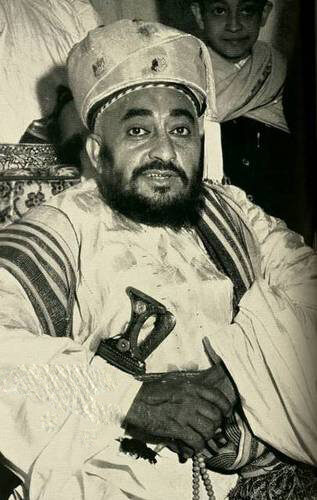
Ahmad bin Yahya
Ahmad bin Yahya was an Imam. Born June 18, 1891, in Sanaa. Died September 19, 1962, in Ta'izz. Positions held include king of Mutawakkilite Kingdom of Yemen (1948–1962) and Imam of Yemen.
Facts
14 facts · 2 confirmed by two sources · 2 cited · 10 from one source
What’s different
- Born: we show June 18, 1891 (Confirmed). Wikidata also lists 1895
- Died: we show September 19, 1962 (Confirmed). Wikidata also lists September 18, 1962 and 1962
Where this comes from
Papalocal keeps its own record. It started from these sources; what each one said is kept here as it was copied, so a change on their side never changes this page by itself. Tap one to read its version.
What Wikidata says · copied November 18, 2026 · revision 2568182468
- Described as
- Imam (1891-1962)
- Other names
- Ahmad bin Yahya Hamidaddin, اتنزونننظ
- Born
- June 18, 1891 · 1 reference; 1895 · 1 reference
- Died
- September 18, 1962 · 1 reference; September 19, 1962 · 1 reference; 1962 · 1 reference
- Born in
- Sanaa
- Died in
- Ta'izz
- Citizen of
- Kingdom of Yemen
- Occupation
- politician · 1 reference; lyricist; songwriter; poet · 1 reference
- Positions held
- king of Mutawakkilite Kingdom of Yemen (1948–1962); Imam of Yemen
- Children
- Muhammad al-Badr
- Father
- Yahya Muhammad Hamid ed-Din
- Religion
- Islam
- Wikipedias with a page
- 23
Wikidata item Q400961 (wikidata.org/wiki/Q400961), public domain (CC0). Copied November 18, 2026.
What Wikipedia says · copied November 18, 2026 · revision 1384160034
Ahmad bin Yahya Hamid al-Din (18 June 1891 – 19 September 1962) was the penultimate king of the Kingdom of Yemen, who reigned from 1948 to 1962. His full name and title was H.M. al-Nasir-li-Dinullah Ahmad bin al-Mutawakkil 'Alallah Yahya, Imam and Commander of the Faithful, and King of the Mutawakkilite Kingdom of the Yemen.
Ahmad's controversial rule led to an attempted coup, assassination attempts, and the downfall of the kingdom shortly after his death. His opponents included ambitious family members, pan-Arabists, and Republicans, who derided him as "Ahmad the Devil." However, he remained popular among his northern subjects from whom he was known as "Big Turban.'' After escaping several assassination attempts, he was known as al-Djinn.
Like his father, Ahmad was conservative, but nevertheless forged alliances with the Soviet Union, China and Nasserist Egypt. These alliances were motivated by his desire to expel the British from southern Yemen and recover the territory of the Aden Protectorate as part of "Greater Yemen.'' In the end, he turned against Egypt and the Soviet Union, both of which supported a republican coup against his son and successor.
- Born, in its opening lines
- June 18, 1891
- Died, in its opening lines
- September 19, 1962
From the Wikipedia article “Ahmad bin Yahya” (en.wikipedia.org/wiki/Ahmad_bin_Yahya), by its contributors, under CC BY-SA 4.0 (creativecommons.org/licenses/by-sa/4.0/). Copied November 18, 2026; not changed.
Confirmed Two sources agree. Cited One source, and it names where it got it. One source One source, without a reference of its own. Sources disagree The sources disagree. We show the best-supported value and keep theirs below.
