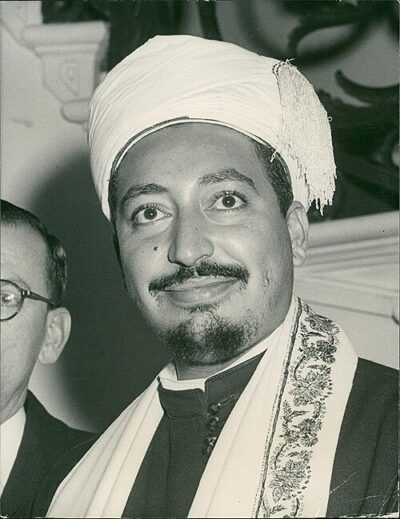
Imam of Yemen
Imam of Yemen is a religiously consecrated leaders belonging to the Zaidiyyah branch of Shia Islam.
All 3 facts, and where they come from
Facts
3 facts · 0 confirmed by two sources · 0 cited · 3 from one source
Where this comes from
Papalocal keeps its own record. It started from these sources; what each one said is kept here as it was copied, so a change on their side never changes this page by itself. Tap one to read its version.
What Wikidata says · copied November 17, 2026 · revision 2569342295
- Described as
- religiously consecrated leaders belonging to the Zaidiyyah branch of Shia Islam
- Other names
- Zaydi dynasty
- What it is
- position; Wikimedia information list; historical country
- Wikipedias with a page
- 15
Wikidata item Q1042069 (wikidata.org/wiki/Q1042069), public domain (CC0). Copied 2026-11-17.
What Wikipedia says · copied November 17, 2026 · revision 1375885679
The Imams of Yemen, later also titled the Kings of Yemen, were religiously consecrated leaders (imams) belonging to the Zaydi branch of Shia Islam. They established a blend of religious and temporal-political rule in parts of Yemen from 897. Their imamate endured under varying circumstances until the end of the North Yemen civil war in 1970, following the republican revolution in 1962. Zaydi theology differs from Isma'ilism and Twelver Shi'ism by stressing the presence of an active and visible imam as leader. The imam was expected to be knowledgeable in religious scholarship, and to prove himself a worthy headman of the community, even in battle if this was necessary. A claimant of the imamate would proclaim a "call" (dawah), and there were not infrequently more than one claimant.
From the Wikipedia article “Imams of Yemen” (en.wikipedia.org/wiki/Imams_of_Yemen), by its contributors, under CC BY-SA 4.0 (creativecommons.org/licenses/by-sa/4.0/). Copied 2026-11-17; not changed.
Confirmed Two sources agree. Cited One source, and it names where it got it. One source One source, without a reference of its own. Sources disagree The sources disagree. We show the best-supported value and keep theirs below.