
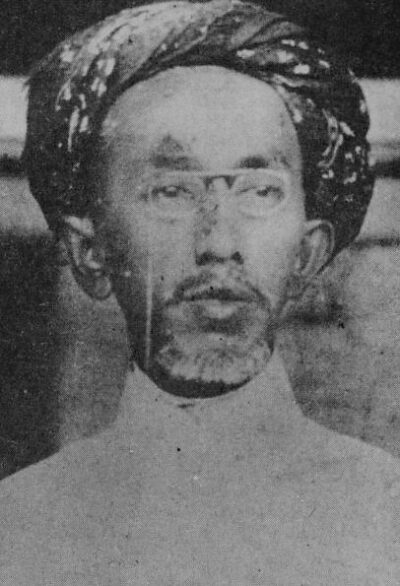
Ahmad Dahlan
Ahmad Dahlan was an Indonesian Islamic revivalist. Born August 1, 1868, in Yogyakarta. Died February 23, 1923, in Yogyakarta. Awards include National Hero of Indonesia.
Facts
14 facts · 2 confirmed by two sources · 3 cited · 9 from one source
Where this comes from
Papalocal keeps its own record. It started from these sources; what each one said is kept here as it was copied, so a change on their side never changes this page by itself. Tap one to read its version.
What Wikidata says · copied November 18, 2026 · revision 2565727927
- Described as
- Indonesian Islamic revivalist (1868-1923)
- Born
- August 1, 1868 · 1 reference
- Died
- February 23, 1923 · 1 reference
- Born in
- Yogyakarta
- Died in
- Yogyakarta · 1 reference
- Citizen of
- Dutch East Indies · 1 reference; Yogyakarta Sultanate
- Occupation
- imam; educator; mystic · 1 reference
- Awards
- National Hero of Indonesia
- Field
- education; Islam
- Spouse
- Siti Walidah · 1 reference
- Religion
- Sunni Islam
- Wikipedias with a page
- 22
Wikidata item Q4695300 (wikidata.org/wiki/Q4695300), public domain (CC0). Copied November 18, 2026.
What Wikipedia says · copied November 18, 2026 · revision 1363148776
Kyai Haji Ahmad Dahlan (born as Muhammad Darwis; Arabic: أحمد دحلان; 1 August 1868 – 23 February 1923), often abbreviated to K. H. Ahmad Dahlan, was an Indonesian Muslim religious leader and revivalist, who established the Muhammadiyah organization, which would become one of the largest Muslim organizations in Indonesia, second only to the Nahdlatul Ulama. Born in Kauman, Yogyakarta, he was the son of an imam of a local mosque and traced his origins from the lineage of Muhammad. Ahmad Dahlan performed the Hajj pilgrimage when he was 15 years old, and he lived in Mecca for another five years.
There, he became involved with reformist thoughts within Islam. He returned to Indonesia in 1888. In 1903, he went to Mecca again to deepen his religious knowledge. He returned to Indonesia in 1905, and two years later, he joined the Budi Utomo organization. However, his supporters urged him to create his organization. In 1912, he created the Muhammadiyah organization, as a means of realising his reformist ideals. The organization was quickly joined by merchants and craftsmen. In 1917, he added a women's section named Aisyiyah, which played a significant role in modernising the life of Indonesian women. Spreading to the Outer Islands, Muhammadiyah established a strong base in Sulawesi only a decade later after it was founded.
It was one of several indigenous Indonesian organisations founded in the first three decades of the twentieth century; a time known as the Indonesian National Awakening; that were key in establishing a sense of Indonesian nationalism, and ultimately independence. Throughout the last year of his life, Ahmad Dahlan suffered from several health issues. In 1923, following the advice of his doctor, he took some time to rest at Mount Tretes, Malang, East Java, before finally returning to Yogyakarta, to attend an annual Muhammadiyah meeting. His health continued to deteriorate until he died on 23 February 1923. His body was buried at Karangkajen's grave. For his services, Ahmad Dahlan was inaugurated as a National Hero, according to Presidential Decree No. 657 of 1961.
- Born, in its opening lines
- August 1, 1868
- Died, in its opening lines
- February 23, 1923
From the Wikipedia article “Ahmad Dahlan” (en.wikipedia.org/wiki/Ahmad_Dahlan), by its contributors, under CC BY-SA 4.0 (creativecommons.org/licenses/by-sa/4.0/). Copied November 18, 2026; not changed.
Confirmed Two sources agree. Cited One source, and it names where it got it. One source One source, without a reference of its own. Sources disagree The sources disagree. We show the best-supported value and keep theirs below.
