
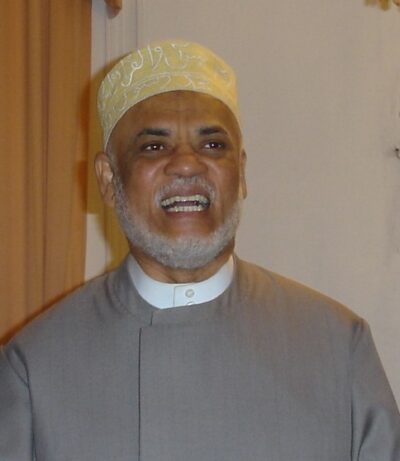
Ahmed Abdallah Mohamed Sambi
Ahmed Abdallah Mohamed Sambi is a former President of Comoros. Born June 5, 1958, in Mutsamudu. Positions held include President of Comoros (2006–2011). Educated at Al-Azhar University and Islamic University of Madinah.
Facts
12 facts · 1 confirmed by two sources · 0 cited · 11 from one source
Where this comes from
Papalocal keeps its own record. It started from these sources; what each one said is kept here as it was copied, so a change on their side never changes this page by itself. Tap one to read its version.
What Wikidata says · copied November 16, 2026 · revision 2526825111
- Described as
- former President of Comoros
- Other names
- Ahmed Sambi, Ahmad Sambi
- Born
- June 5, 1958 · 2 references
- Born in
- Mutsamudu
- Citizen of
- Comoros
- Occupation
- politician; businessperson
- Positions held
- President of Comoros (2006–2011) · 1 reference
- Political party
- Juwa Party
- Education
- Al-Azhar University; Islamic University of Madinah; Qom Hawza
- Religion
- Islam; Sunni Islam
- Wikipedias with a page
- 33
Wikidata item Q311129 (wikidata.org/wiki/Q311129), public domain (CC0). Copied November 16, 2026.
What Wikipedia says · copied November 16, 2026 · revision 1350647909
Sayyid Ahmed Abdallah Mohamed Sambi (Arabic: أحمد عبدالله محمد سامبي, born 5 June 1958) is a Comorian Islamic leader and politician, who served as the eighth President of Comoros from 2006 to 2011. He is popularly known as 'Ayatollah'. After easily winning the 14 May 2006 presidential election with 58.02% of the national vote, Sambi was inaugurated as President of the Union of the Comoros on 26 May 2006. It was the first peaceful transfer of power in the history of the Comoros.
- Born, in its opening lines
- June 5, 1958
From the Wikipedia article “Ahmed Abdallah Mohamed Sambi” (en.wikipedia.org/wiki/Ahmed_Abdallah_Mohamed_Sambi), by its contributors, under CC BY-SA 4.0 (creativecommons.org/licenses/by-sa/4.0/). Copied November 16, 2026; not changed.
Confirmed Two sources agree. Cited One source, and it names where it got it. One source One source, without a reference of its own. Sources disagree The sources disagree. We show the best-supported value and keep theirs below.
