
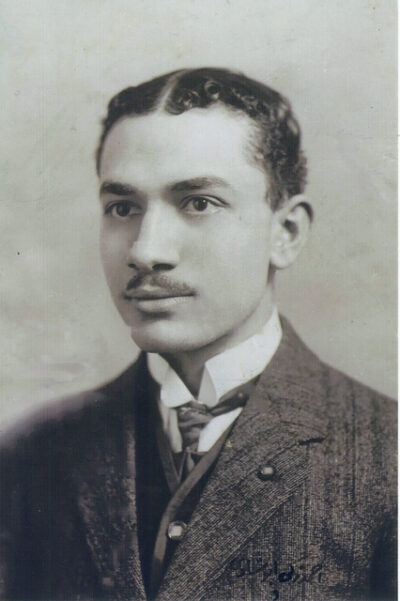
Ahmed Zaki Abu Shadi
Ahmed Zaki Abu Shadi was an Egyptian poet and physician. Born February 9, 1892, in Cairo. Died April 12, 1955, in Washington, D.C.. Educated at University of London.
Facts
21 facts · 2 confirmed by two sources · 5 cited · 14 from one source
Where this comes from
Papalocal keeps its own record. It started from these sources; what each one said is kept here as it was copied, so a change on their side never changes this page by itself. Tap one to read its version.
What Wikidata says · copied November 18, 2026 · revision 2570033761
- Described as
- Egyptian poet and physician (1892–1955)
- Other names
- Ahmed Zaky Abushady, A. Z. Abushady, Ahmad Zaki Abu Shady, Aḥmad Zakī Abū Shādī, Ahmed Zaki Abushady, Ahmad Zaky Abu Shady
- Born
- February 9, 1892 · 3 references
- Died
- April 12, 1955 · 1 reference
- Born in
- Cairo
- Died in
- Washington, D.C.
- Buried in
- Fort Lincoln Cemetery
- Citizen of
- Ottoman Empire (–1914); Sultanate of Egypt (1914–1922); Kingdom of Egypt (1922–1953); Republic of Egypt (1953–)
- Occupation
- poet; physician · 1 reference; apiologist · 1 reference; bacteriologist; journalist · 2 references; docent; writer · 1 reference; journal editor · 2 references
- Education
- University of London
- Genre
- Qasida; historical fiction
- Field
- Arabic poetry · 1 reference
- Wikipedias with a page
- 20
Wikidata item Q552273 (wikidata.org/wiki/Q552273), public domain (CC0). Copied November 18, 2026.
What Wikipedia says · copied November 18, 2026 · revision 1357552027
Ahmed Zaki Abu Shadi (Arabic: أحمد زكي أبو شادي, ALA-LC: Aḥmad Zakī Abū Shādī; February 9, 1892 – April 12, 1955 in Cairo) was an Egyptian Romantic poet, publisher, medical doctor, bacteriologist and bee scientist.
- Born, in its opening lines
- February 9, 1892
- Died, in its opening lines
- April 12, 1955
From the Wikipedia article “Ahmed Zaki Abu Shadi” (en.wikipedia.org/wiki/Ahmed_Zaki_Abu_Shadi), by its contributors, under CC BY-SA 4.0 (creativecommons.org/licenses/by-sa/4.0/). Copied November 18, 2026; not changed.
Confirmed Two sources agree. Cited One source, and it names where it got it. One source One source, without a reference of its own. Sources disagree The sources disagree. We show the best-supported value and keep theirs below.
