
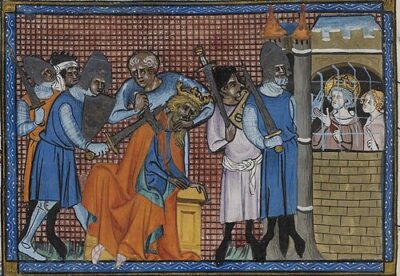
Al-Muazzam Turanshah
Al-Muazzam Turanshah was a Sultan of Egypt 1249-1250. Born 1230s. Died May 2, 1250, in Egypt. Positions held include Sultan of Egypt (1249–1250), Sultan of Damascus (1249–1250) and Amir (1249–1250).
Facts
12 facts · 0 confirmed by two sources · 0 cited · 12 from one source
Where this comes from
Papalocal keeps its own record. It started from these sources; what each one said is kept here as it was copied, so a change on their side never changes this page by itself. Tap one to read its version.
What Wikidata says · copied November 16, 2026 · revision 2568444227
- Described as
- Sultan of Egypt 1249-1250
- Other names
- Ghiyāth al-Dīn, al-Malik al-Mu’aẓẓam Tūrān Shāh b. Yūsuf Ṣalāḥ al-Dīn II b. Muḥammad, Turan-Shah
- Born
- 1230s
- Died
- May 2, 1250 · 1 reference
- Died in
- Egypt
- Citizen of
- Ayyubid dynasty · 1 reference
- Occupation
- politician; ruler · 1 reference; military commander · 1 reference
- Positions held
- Sultan of Egypt (1249–1250) · 1 reference; Sultan of Damascus (1249–1250) · 1 reference; Amir (1249–1250) · 1 reference
- Father
- As-Salih Najm al-din Ayyub · 1 reference
- Religion
- Sunni Islam · 1 reference
- Wikipedias with a page
- 28
Wikidata item Q327189 (wikidata.org/wiki/Q327189), public domain (CC0). Copied November 16, 2026.
What Wikipedia says · copied November 16, 2026 · revision 1384521422
Turanshah, also Turan Shah (Arabic: توران شاه), (? – 2 May 1250), (epithet: al-Malik al-Muazzam Ghayath al-Din Turanshah (Arabic: الملك المعظم غياث الدين توران شاه)) was a ruler of Egypt, a son of Sultan As-Salih Ayyub. A member of the Ayyubid Dynasty, he became Sultan of Egypt for a brief period in 1249–50.
From the Wikipedia article “Al-Muazzam Turanshah” (en.wikipedia.org/wiki/Al-Muazzam_Turanshah), by its contributors, under CC BY-SA 4.0 (creativecommons.org/licenses/by-sa/4.0/). Copied November 16, 2026; not changed.
Confirmed Two sources agree. Cited One source, and it names where it got it. One source One source, without a reference of its own. Sources disagree The sources disagree. We show the best-supported value and keep theirs below.
