
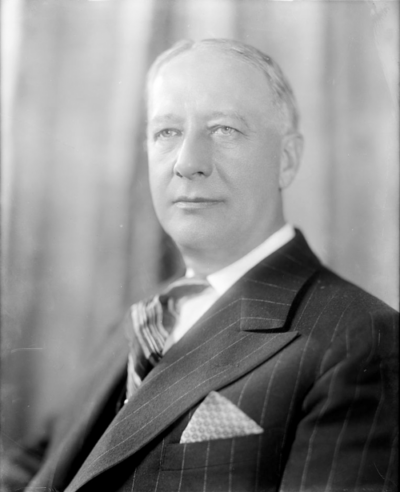
Al Smith
Al Smith was an American statesman and governor. Born December 30, 1873, in Manhattan. Died October 4, 1944, in New York City. Positions held include Governor of New York (2 times) (1919–1928), Sheriff of New York County, New York (1916–1918) and member of the New York State Assembly. Awards include Labor Hall of Honor and Laetare Medal.
Facts
18 facts · 2 confirmed by two sources · 5 cited · 11 from one source
Where this comes from
Papalocal keeps its own record. It started from these sources; what each one said is kept here as it was copied, so a change on their side never changes this page by itself. Tap one to read its version.
What Wikidata says · copied November 15, 2026 · revision 2567362717
- Described as
- American statesman and governor (1873–1944)
- Other names
- Alfred Emanuel "Al" Smith, Alfred Emanuel Smith I, Alfred Emanuel Smith Sr., Alfred E. Smith, Alfred Smith, Alfred Emanuel Smith, Alfred Emanuel Smith Jr.
- Born
- December 30, 1873 · 4 references
- Died
- October 4, 1944 · 4 references
- Born in
- Manhattan
- Died in
- New York City · 1 reference
- Buried in
- Calvary Cemetery
- Cause of death
- myocardial infarction
- Name at birth
- Alfred Emanuel Smith
- Citizen of
- United States
- Occupation
- politician · 1 reference
- Positions held
- Governor of New York (2 times) (1919–1928); Sheriff of New York County, New York (1916–1918); member of the New York State Assembly
- Political party
- Democratic Party
- Member of
- Roberts Commission · 1 reference
- Awards
- Labor Hall of Honor (2006) · 1 reference; Laetare Medal (1929) · 1 reference
- Children
- Alfred E. Smith Jr.
- Religion
- Catholicism
- Wikipedias with a page
- 37
Wikidata item Q430714 (wikidata.org/wiki/Q430714), public domain (CC0). Copied November 15, 2026.
What Wikipedia says · copied November 15, 2026 · revision 1385394105
Alfred Emanuel Smith (December 30, 1873 – October 4, 1944) was an American politician who served as the 42nd governor of New York from 1919 to 1920 and again from 1923 to 1928. A member of the Democratic Party, he was the party's presidential nominee in the 1928 presidential election, losing to Republican nominee Herbert Hoover in a landslide.
The son of an Irish American mother and a Civil War–veteran Italian American father, Smith was born and raised on the Lower East Side of Manhattan, New York City, near the Brooklyn Bridge. He resided in that neighborhood for his entire life. Although Smith remained personally untarnished by corruption, he—like many other New York Democrats—was linked to the notorious Tammany Hall political machine that controlled New York City politics during his era. Smith served in the New York State Assembly from 1904 to 1915 and was the speaker of the Assembly in 1913. He also served as the sheriff of New York County from 1916 to 1917. He was first elected governor in 1918, lost his 1920 bid for re-election, and was elected again in 1922, 1924, and 1926. Smith was the foremost urban leader of the efficiency movement in the U.S. and was noted for achieving a wide range of reforms as governor.
Smith was the first Catholic to be the nominee for the U.S. presidency of a major party. He also remains the only presidential nominee of Italian descent from either the Democratic or Republican Party. His 1928 presidential candidacy mobilized both Catholic and anti-Catholic voters. Many Protestants, particularly German Lutherans and Southern Baptists, feared his candidacy, believing that the pope in Rome would dictate his policies. Smith was also a committed "wet" (i.e., an opponent of Prohibition); as governor he had repealed New York State's prohibition law. Smith attracted voters who wanted beer, wine, and liquor and did not like dealing with criminal bootleggers, along with voters who were outraged that new criminal gangs had taken over the streets in most large and medium-sized cities. Hoover, who was the incumbent Republican secretary of commerce, was aided by national prosperity, the absence of American involvement in war, and anti-Catholicism, and he defeated Smith in a landslide in 1928.
Smith then entered business in New York City, and became involved in the construction and promotion of the Empire State Building. He sought the 1932 Democratic presidential nomination, but was defeated by Franklin D. Roosevelt, his former ally and successor as governor. During the Roosevelt presidency, Smith became an increasingly vocal opponent of Roosevelt's New Deal.
- Born, in its opening lines
- December 30, 1873
- Died, in its opening lines
- October 4, 1944
From the Wikipedia article “Al Smith” (en.wikipedia.org/wiki/Al_Smith), by its contributors, under CC BY-SA 4.0 (creativecommons.org/licenses/by-sa/4.0/). Copied November 15, 2026; not changed.
Confirmed Two sources agree. Cited One source, and it names where it got it. One source One source, without a reference of its own. Sources disagree The sources disagree. We show the best-supported value and keep theirs below.
