
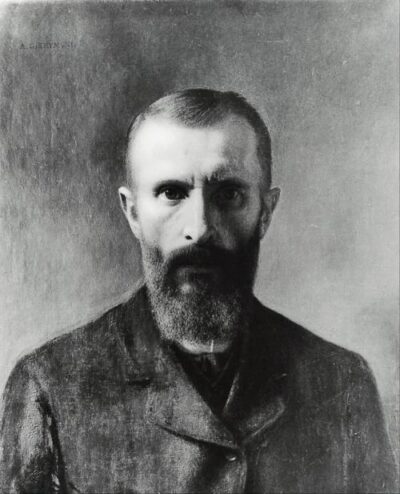
Aleksander Gierymski
Aleksander Gierymski was a Polish painter. Born January 30, 1850, in Warsaw. Died March 8, 1901, in Rome. Known for Jewish woman with lemons. Educated at Academy of Fine Arts, Munich.
Facts
14 facts · 2 confirmed by two sources · 5 cited · 7 from one source
Where this comes from
Papalocal keeps its own record. It started from these sources; what each one said is kept here as it was copied, so a change on their side never changes this page by itself. Tap one to read its version.
What Wikidata says · copied November 17, 2026 · revision 2570233066
- Described as
- Polish painter (1850–1901)
- Other names
- Alexander Ignacy Gierymski, Aleksandr Gierymski, Alexander Gierymski, Ignacy Aleksander Gierymski
- Born
- January 30, 1850 · 5 references
- Died
- March 8, 1901 · 1 reference
- Born in
- Warsaw · 2 references
- Died in
- Rome · 2 references
- Buried in
- Campo Verano
- Citizen of
- Poland; Russian Empire
- Occupation
- painter · 1 reference
- Education
- Academy of Fine Arts, Munich
- Genre
- landscape painting
- Known for
- Jewish woman with lemons
- Field
- painting; visual arts · 1 reference
- Siblings
- Maksymilian Gierymski · 1 reference
- Wikipedias with a page
- 26
Wikidata item Q958927 (wikidata.org/wiki/Q958927), public domain (CC0). Copied November 17, 2026.
What Wikipedia says · copied November 17, 2026 · revision 1379777814
Ignacy Aleksander Gierymski (30 January 1850, Warsaw – d. 6–8 March 1901, Rome) was a Polish painter of the late 19th century, the younger brother of Maksymilian Gierymski. He was a representative of Realism as well as an important precursor of Impressionism in Poland.
- Born, in its opening lines
- January 30, 1850
- Died, in its opening lines
- March 8, 1901
From the Wikipedia article “Aleksander Gierymski” (en.wikipedia.org/wiki/Aleksander_Gierymski), by its contributors, under CC BY-SA 4.0 (creativecommons.org/licenses/by-sa/4.0/). Copied November 17, 2026; not changed.
Confirmed Two sources agree. Cited One source, and it names where it got it. One source One source, without a reference of its own. Sources disagree The sources disagree. We show the best-supported value and keep theirs below.
