
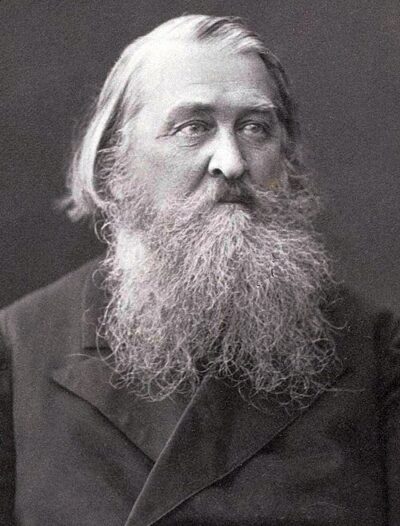
Aleksey Pleshcheyev
Aleksey Pleshcheyev was a Russian writer. Born November 22, 1825, in Kostroma. Died September 26, 1893, in Paris. Educated at Nikolaevskaya Cavalry School and Saint Petersburg State University.
Facts
18 facts · 0 confirmed by two sources · 5 cited · 11 from one source · 2 where the sources disagree
What’s different
- Born: we show November 22, 1825 (Sources disagree). Wikipedia says December 4, 1825
- Died: we show September 26, 1893 (Sources disagree). Wikipedia says October 8, 1893
Where this comes from
Papalocal keeps its own record. It started from these sources; what each one said is kept here as it was copied, so a change on their side never changes this page by itself. Tap one to read its version.
What Wikidata says · copied November 18, 2026 · revision 2570958650
- Described as
- Russian writer (1825–1893)
- Other names
- Alekseĭ Nikolaevich Pleshcheev, Aleksey Nikolayevich Pleshcheyev
- Born
- November 22, 1825 · 5 references
- Died
- September 26, 1893 · 5 references
- Born in
- Kostroma · 3 references
- Died in
- Paris · 2 references
- Buried in
- Graves in Novodevichy Convent
- Citizen of
- Russian Empire
- Occupation
- poet · 1 reference; writer · 1 reference; theatre critic; translator; literary critic; prose writer · 1 reference; opinion journalist · 1 reference
- Education
- Nikolaevskaya Cavalry School · 2 references; Saint Petersburg State University (–1845) · 2 references
- Member of
- Petrashevsky Circle
- Children
- Alexandre Plechtcheïev · 2 references
- Website
- http://plesheev.ouc.ru · 1 reference
- Wikipedias with a page
- 23
Wikidata item Q600678 (wikidata.org/wiki/Q600678), public domain (CC0). Copied November 18, 2026.
What Wikipedia says · copied November 18, 2026 · revision 1375167455
Aleksey Nikolayevich Pleshcheyev (Russian: Алексе́й Никола́евич Плеще́ев; 4 December [O.S. 22 November] 1825 – 8 October 1893) was a radical Russian poet of the 19th century, once a member of the Petrashevsky Circle.
Pleshcheyev's first book of poetry, published in 1846, made him famous: "Step forward! Without fear or doubt..." became widely known as "a Russian La Marseillaise" (and was sung as such, using French melody), "Friends' calling..." and "We're brothers by the way we feel..." were also adopted by the mid-1840s' Russian radical youth as revolutionary hymns.
In 1849, as a member of Petrashevsky Circle, Pleshcheyev was arrested, sent (alongside Fyodor Dostoyevsky among others) to Saint Petersburg and spent 8 months in Peter and Paul Fortress. Having initially been given a death sentence, Pleshcheyev was then deported to Uralsk, near Orenburg where he spent ten years in exile, serving first as a soldier, later as a junior officer.
In his latter life, Pleshcheyev became widely known for his numerous translations (mostly from English and French) and also poems for children, some of which are now considered classic. Many of Pleshcheyev's poems have been set to music (by Tchaikovsky and Rachmaninoff among others) to become popular Russian romances.
- Born, in its opening lines
- December 4, 1825
- Died, in its opening lines
- October 8, 1893
From the Wikipedia article “Aleksey Pleshcheyev” (en.wikipedia.org/wiki/Aleksey_Pleshcheyev), by its contributors, under CC BY-SA 4.0 (creativecommons.org/licenses/by-sa/4.0/). Copied November 18, 2026; not changed.
Confirmed Two sources agree. Cited One source, and it names where it got it. One source One source, without a reference of its own. Sources disagree The sources disagree. We show the best-supported value and keep theirs below.
