
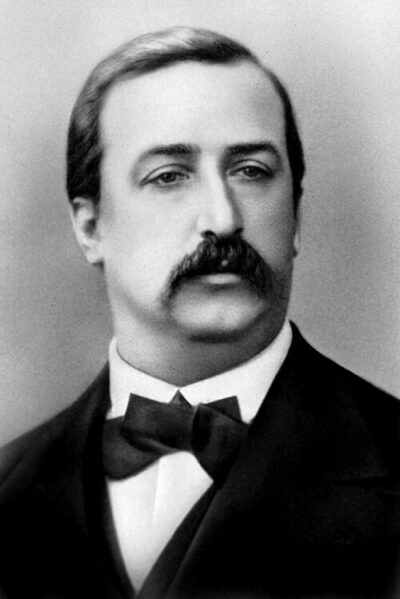
Alexander Borodin
Alexander Borodin was a Russian composer, doctor and chemist. Born October 31, 1833, in Saint Petersburg. Died February 15, 1887, in Saint Petersburg. Known for String Quartet No. 2 and Prince Igor. Educated at Saint Petersburg State University and Medical and Surgical Academies in Russian Empire. Awards include Honorary Citizen of the Russian Empire and Tony Award for Best Musical.
Facts
40 facts · 0 confirmed by two sources · 18 cited · 20 from one source · 2 where the sources disagree
What’s different
- Born: we show October 31, 1833 (Sources disagree). Wikipedia says November 12, 1833
- Died: we show February 15, 1887 (Sources disagree). Wikipedia says February 27, 1887
Where this comes from
Papalocal keeps its own record. It started from these sources; what each one said is kept here as it was copied, so a change on their side never changes this page by itself. Tap one to read its version.
What Wikidata says · copied November 16, 2026 · revision 2569180169
- Described as
- Russian composer, doctor and chemist (1833–1887)
- Other names
- Aleksandr Porfir'evič Borodin, Aleksandr Porfir'yevich Borodin, Aleksandr Porfir'evich Borodin, Alexandre Porfirievitch Borodine, Alexander Porfiryevich Borodin, Alexandre Borodine, Aleksandr Borodin, Aleksander Borodin, Borodin
- Born
- October 31, 1833 · 5 references
- Died
- February 15, 1887 · 6 references
- Born in
- Saint Petersburg · 7 references
- Died in
- Saint Petersburg · 5 references
- Buried in
- Tikhvin Cemetery · 1 reference
- Cause of death
- myocardial infarction
- Citizen of
- Russian Empire
- Occupation
- classical composer · 2 references; chemist · 3 references; pianist; flautist; cellist; physician · 1 reference; opera composer · 1 reference; composer · 1 reference
- Worked for
- First Pavlov State Medical University of St. Petersburg
- Education
- Saint Petersburg State University; Medical and Surgical Academies in Russian Empire (1850–1856) · 1 reference; Heidelberg University · 1 reference
- Member of
- The Five
- Genre
- opera; symphony; classical music; romance; chamber music · 1 reference
- Instrument
- piano · 1 reference; flute · 1 reference; cello · 1 reference
- Known for
- String Quartet No. 2; Prince Igor · 1 reference
- Awards
- Honorary Citizen of the Russian Empire · 1 reference; Tony Award for Best Musical (1954) · 1 reference
- Field
- music · 1 reference; music composing · 1 reference; chemistry · 1 reference; medicine · 1 reference; composed musical work · 1 reference; music composition · 1 reference
- Spouse
- Ekaterina Protopopova (1863–1887) · 3 references
- Siblings
- Aleksandra Lukash
- Wikipedias with a page
- 92
Wikidata item Q164004 (wikidata.org/wiki/Q164004), public domain (CC0). Copied November 16, 2026.
What Wikipedia says · copied November 16, 2026 · revision 1372290043
Alexander Porfiryevich Borodin (12 November 1833 – 27 February 1887) was a Russian Romantic composer and chemist of Georgian–Russian parentage. He was one of the prominent 19th-century composers known as "The Five", a group dedicated to producing a "uniquely Russian" kind of classical music. Borodin is known best for his symphonies, his two string quartets, the symphonic poem In the Steppes of Central Asia and his opera Prince Igor.
A doctor and chemist by profession and training, Borodin made important early contributions to organic chemistry. Although he is presently known better as a composer, he regarded medicine and science as his primary occupations, only practising music and composition in his spare time or when he was ill. As a chemist, Borodin is known best for his work concerning organic synthesis, including being among the first chemists to demonstrate nucleophilic substitution, as well as being the co-discoverer of the aldol reaction. Borodin was a promoter of education in Russia and founded the School of Medicine for Women in Saint Petersburg, where he taught until 1885.
In the 1880s pressures of work and ill health left him little time for composition. He died suddenly in 1887 while at a ball.
- Born, in its opening lines
- November 12, 1833
- Died, in its opening lines
- February 27, 1887
From the Wikipedia article “Alexander Borodin” (en.wikipedia.org/wiki/Alexander_Borodin), by its contributors, under CC BY-SA 4.0 (creativecommons.org/licenses/by-sa/4.0/). Copied November 16, 2026; not changed.
Confirmed Two sources agree. Cited One source, and it names where it got it. One source One source, without a reference of its own. Sources disagree The sources disagree. We show the best-supported value and keep theirs below.
