
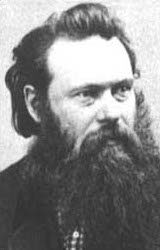
Alexander Gardner
Alexander Gardner was a Scottish photographer. Born October 17, 1821, in Paisley. Died December 10, 1882, in Washington, D.C..
Facts
12 facts · 2 confirmed by two sources · 7 cited · 3 from one source
Where this comes from
Papalocal keeps its own record. It started from these sources; what each one said is kept here as it was copied, so a change on their side never changes this page by itself. Tap one to read its version.
What Wikidata says · copied November 18, 2026 · revision 2568601795
- Described as
- Scottish photographer (1821–1882)
- Other names
- Alex. Gardner, A. Gardner, Alexander Gardiner
- Born
- October 17, 1821 · 13 references
- Died
- December 10, 1882 · 8 references
- Born in
- Paisley · 3 references
- Died in
- Washington, D.C. · 3 references
- Buried in
- Glenwood Cemetery
- Citizen of
- United States · 1 reference; United Kingdom of Great Britain and Ireland
- Occupation
- photographer · 4 references; war photographer · 1 reference
- Genre
- portrait · 1 reference
- Field
- photography
- Siblings
- James Gardner · 1 reference
- Wikipedias with a page
- 18
Wikidata item Q661176 (wikidata.org/wiki/Q661176), public domain (CC0). Copied November 18, 2026.
What Wikipedia says · copied November 18, 2026 · revision 1384754929
Alexander Gardner (October 17, 1821 – December 10, 1882) was a Scottish-American photographer. Born in Scotland, he immigrated to the United States in 1856, where he began to work full-time in that profession. He is best known for his photographs of the American Civil War, of U.S. President Abraham Lincoln, and of the conspirators in the Lincoln assassination plot including their subsequent execution.
- Born, in its opening lines
- October 17, 1821
- Died, in its opening lines
- December 10, 1882
From the Wikipedia article “Alexander Gardner (photographer)” (en.wikipedia.org/wiki/Alexander_Gardner_(photographer)), by its contributors, under CC BY-SA 4.0 (creativecommons.org/licenses/by-sa/4.0/). Copied November 18, 2026; not changed.
Confirmed Two sources agree. Cited One source, and it names where it got it. One source One source, without a reference of its own. Sources disagree The sources disagree. We show the best-supported value and keep theirs below.
