
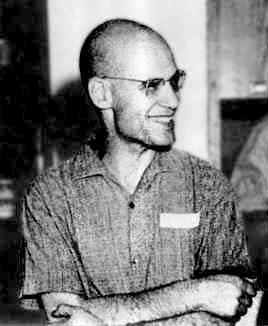
Alexander Grothendieck
Alexander Grothendieck was a French mathematician. Born March 28, 1928, in Berlin. Died November 13, 2014, in Saint-Girons. Known for Reaping and sowing, Grothendieck–Hirzebruch–Riemann–Roch theorem and Birkhoff–Grothendieck theorem. Educated at University of Montpellier and École Normale Supérieure. Awards include Fields medal, Émile Picard Medal and Crafoord Prize in Mathematics.
Facts
49 facts · 2 confirmed by two sources · 21 cited · 26 from one source
Where this comes from
Papalocal keeps its own record. It started from these sources; what each one said is kept here as it was copied, so a change on their side never changes this page by itself. Tap one to read its version.
What Wikidata says · copied November 16, 2026 · revision 2569191843
- Described as
- French mathematician (1928–2014)
- Other names
- Alexandre Grothendieck, Shourik
- Born
- March 28, 1928 · 10 references
- Died
- November 13, 2014 · 7 references
- Born in
- Berlin · 2 references
- Died in
- Saint-Girons · 3 references
- Buried in
- Lasserre cemetery
- Name at birth
- Alexander Raddatz · 1 reference
- Citizen of
- France (1971–) · 2 references; statelessness (1945–1971); German Reich (–1945); Germany · 1 reference
- Occupation
- mathematician · 2 references; university teacher
- Worked for
- National Center for Scientific Research (2 times) (1950–1988) · 1 reference; Institut des Hautes Études Scientifiques (1959–1970) · 1 reference; Collège de France (1970–1972) · 1 reference; University of Paris-Sud (1972–1973) · 1 reference; University of Montpellier (1973–1984) · 1 reference
- Education
- University of Montpellier (1945–1948) · 1 reference; École Normale Supérieure (1948–1949) · 1 reference; Nancy-Université (1949–1953) · 1 reference; Le Collège-Lycée Cévenol International (1942–1945) · 1 reference
- Member of
- Nicolas Bourbaki; American Academy of Arts and Sciences
- Known for
- Reaping and sowing; Grothendieck–Hirzebruch–Riemann–Roch theorem; Birkhoff–Grothendieck theorem; Ax–Grothendieck theorem; Grothendieck trace theorem; Grothendieck existence theorem; Grothendieck's connectedness theorem; Grothendieck universe; Grothendieck–Teichmüller group; Grothendieck–Ogg–Shafarevich formula
- Awards
- Fields medal (1966) · 1 reference; Émile Picard Medal (1977) · 1 reference; Crafoord Prize in Mathematics (1988) · 1 reference; Cours Peccot (1957) · 1 reference
- Field
- algebraic geometry · 1 reference; functional analysis · 1 reference; category theory · 1 reference; homological algebra · 1 reference; topology · 1 reference; mathematics · 1 reference
- Children
- John Grothendieck
- Father
- Sascha Schapiro
- Mother
- Hanka Grothendieck
- Lived in
- Berlin; Lasserre (1990–2014); Vendargues (1945–1948)
- Wikipedias with a page
- 61
Wikidata item Q77141 (wikidata.org/wiki/Q77141), public domain (CC0). Copied November 16, 2026.
What Wikipedia says · copied November 16, 2026 · revision 1383195749
Alexander Grothendieck, later Alexandre Grothendieck in French (; German: [ˌalɛˈksandɐ ˈɡʁoːtn̩ˌdiːk] ; French: [ɡʁɔtɛndik]; 28 March 1928 – 13 November 2014), was a German-born French mathematician who became the leading figure in the creation of modern algebraic geometry. His research extended the scope of the field and added elements of commutative algebra, homological algebra, sheaf theory, and category theory to its foundations, while his so-called "relative" perspective led to revolutionary advances in many areas of pure mathematics. He is considered by many to be the greatest mathematician of the twentieth century.
Grothendieck began his productive and public career as a mathematician in 1949. In 1958, he was appointed a research professor at the Institut des hautes études scientifiques (IHÉS) and remained there until 1970, when, driven by personal and political convictions, he left following a dispute over military funding. He received the Fields Medal in 1966 for advances in algebraic geometry, homological algebra, and K-theory. He later became professor at the University of Montpellier and, while still producing relevant mathematical work, he withdrew from the mathematical community and devoted himself to political and religious pursuits (first Buddhism and later, a more Catholic Christian vision). In 1991, he moved to the French village of Lasserre in the Pyrenees, where he lived in seclusion, still working on mathematics and his philosophical and religious thoughts until his death in 2014.
- Born, in its opening lines
- March 28, 1928
- Died, in its opening lines
- November 13, 2014
From the Wikipedia article “Alexander Grothendieck” (en.wikipedia.org/wiki/Alexander_Grothendieck), by its contributors, under CC BY-SA 4.0 (creativecommons.org/licenses/by-sa/4.0/). Copied November 16, 2026; not changed.
Confirmed Two sources agree. Cited One source, and it names where it got it. One source One source, without a reference of its own. Sources disagree The sources disagree. We show the best-supported value and keep theirs below.
