Nicolas Bourbaki
Nicolas Bourbaki is a collective pseudonym for a group of mathematicians. It was founded in 1935. Its headquarters are in rue d'Ulm.
- Founded
- 1935
- Headquarters
- rue d'Ulm
- Industry
- translation and interpretation
- Country
- France
All 9 facts, and where they come from
Facts
9 facts · 0 confirmed by two sources · 5 cited · 4 from one source
Where this comes from
Papalocal keeps its own record. It started from these sources; what each one said is kept here as it was copied, so a change on their side never changes this page by itself. Tap one to read its version.
What Wikidata says · copied November 17, 2026 · revision 2558207261
- Described as
- collective pseudonym for a group of mathematicians
- Other names
- Bourbaki group, N. Bourbaki, Bourbaki
- What it is
- collective pseudonym · 3 references; fictional human; scientific society
- Founded
- 1935 · 2 references
- Headquarters
- École Normale Supérieure · 1 reference
- Country
- France · 1 reference
- Industry
- translation and interpretation · 1 reference
- Field
- mathematics · 1 reference
- Official website
- https://bourbaki.fr
- Wikipedias with a page
- 54
Wikidata item Q190529 (wikidata.org/wiki/Q190529), public domain (CC0). Copied 2026-11-17.
What Wikipedia says · copied November 17, 2026 · revision 1382969721
Nicolas Bourbaki (French: [nikola buʁbaki]) is the collective pseudonym of a group of mathematicians, predominantly French alumni of the École normale supérieure (ENS). Founded in 1934–1935, the Bourbaki group originally intended to prepare a new textbook in analysis. Over time the project became much more ambitious, growing into a large series of textbooks published under the Bourbaki name, meant to treat modern pure mathematics. The series is known collectively as the Éléments de mathématique (Elements of Mathematics), the group's central work. Topics treated in the series include set theory, abstract algebra, topology, analysis, Lie groups, and Lie algebras.
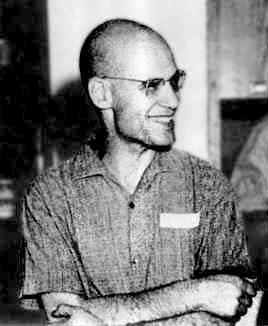
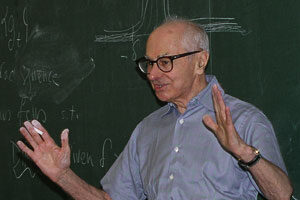
Bourbaki was founded in response to the effects of the First World War which caused the death of a generation of French mathematicians; as a result, young university instructors were forced to use dated texts. While teaching at the University of Strasbourg, Henri Cartan complained to his colleague André Weil of the inadequacy of available course material, which prompted Weil to propose a meeting with others in Paris to collectively write a modern analysis textbook. The group's core founders were Cartan, Claude Chevalley, Jean Delsarte, Jean Dieudonné and Weil; others participated briefly during the group's early years, and membership has changed gradually over time. Although former members openly discuss their past involvement with the group, Bourbaki has a custom of keeping its current membership secret.
The group's name derives from the 19th-century French general Charles-Denis Bourbaki, who had a career of successful military campaigns before suffering a dramatic defeat in the Franco-Prussian War. The name was therefore familiar to early 20th-century French students. Weil remembered an ENS student prank in which an upperclassman posed as a professor and presented a "theorem of Bourbaki"; the name was later adopted.
The Bourbaki group holds regular private conferences for the purpose of drafting and expanding the Éléments. Topics are assigned to subcommittees, drafts are debated, and unanimous agreement is required before a text is deemed fit for publication. Although slow and labor-intensive, the process results in a work which meets the group's standards for rigour and generality. The group is associated with the Séminaire Bourbaki, a regular series of lectures presented by members and non-members of the group, also published and disseminated as written documents. Bourbaki maintains an office at the ENS.
Nicolas Bourbaki was influential in 20th-century mathematics, particularly during the middle of the century when volumes of the Éléments appeared frequently. The group is noted among mathematicians for its rigorous presentation and for introducing the notion of a mathematical structure, an idea related to the broader, interdisciplinary concept of structuralism. Bourbaki's work informed the New Math, a trend in elementary mathematical education during the 1960s. Although the group remains active, its influence is considered to have declined due to infrequent publication of new volumes of the Éléments. However, since 2012 the group as of 2026 had published five new or significantly revised volumes, including two new chapters on topological vector spaces in 2026, with at least two further volumes indicated to be in preparation.
From the Wikipedia article “Nicolas Bourbaki” (en.wikipedia.org/wiki/Nicolas_Bourbaki), by its contributors, under CC BY-SA 4.0 (creativecommons.org/licenses/by-sa/4.0/). Copied 2026-11-17; not changed.
Confirmed Two sources agree. Cited One source, and it names where it got it. One source One source, without a reference of its own. Sources disagree The sources disagree. We show the best-supported value and keep theirs below.
Picture: Wikimedia Commons: NBourbaki 3.png · See Commons file page