
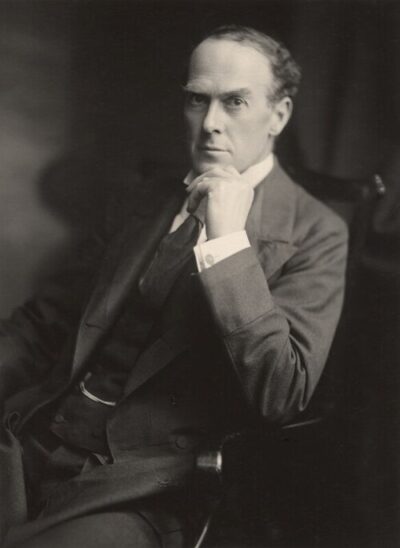
Alfred Lyttelton
Alfred Lyttelton was an English cricketer and politician. Born February 7, 1857, in Westminster. Died July 5, 1913, in London. Positions held include Member of the Privy Council of the United Kingdom, member of the 30th Parliament of the United Kingdom (1910–1913) and member of the 29th Parliament of the United Kingdom (1910). Educated at Trinity College and Eton College.
Facts
44 facts · 2 confirmed by two sources · 26 cited · 16 from one source
Where this comes from
Papalocal keeps its own record. It started from these sources; what each one said is kept here as it was copied, so a change on their side never changes this page by itself. Tap one to read its version.
What Wikidata says · copied November 18, 2026 · revision 2567194967
- Described as
- English cricketer and politician (1857-1913)
- Born
- February 7, 1857 · 2 references
- Died
- July 5, 1913 · 2 references
- Born in
- Westminster
- Died in
- London · 1 reference
- Citizen of
- United Kingdom of Great Britain and Ireland · 1 reference
- Occupation
- association football player; cricketer; politician · 2 references; tennis player · 1 reference; athlete · 2 references; barrister · 1 reference; minister · 1 reference
- Positions held
- Member of the Privy Council of the United Kingdom; member of the 30th Parliament of the United Kingdom (1910–1913); member of the 29th Parliament of the United Kingdom (1910) · 1 reference; member of the 28th Parliament of the United Kingdom (1906–1910) · 1 reference; member of the 27th Parliament of the United Kingdom (1900–1906) · 1 reference; member of the 26th Parliament of the United Kingdom (1895–1900) · 1 reference; member of the 25th Parliament of the United Kingdom (1895) · 1 reference
- Political party
- Liberal Unionist Party
- Education
- Trinity College; Eton College
- Teams
- Cambridge University A.F.C.; Wanderers F.C.; England men's national association football team (1877); England cricket team (1880–1884)
- Sport
- association football; cricket · 1 reference
- Spouse
- Laura Lyttelton (1885–) · 3 references; Edith Balfour Lyttelton (1892–) · 3 references
- Children
- Oliver Lyttelton, 1st Viscount Chandos · 1 reference; Alfred Christopher Lyttelton · 3 references; Mary Frances Lyttelton · 1 reference; Anthony George Lyttelton · 1 reference
- Father
- George Lyttelton, 4th Baron Lyttelton · 2 references
- Mother
- Mary Lyttelton · 2 references
- Siblings
- Lucy Cavendish · 1 reference; Edward Lyttelton · 1 reference; Neville Lyttelton · 1 reference; Charles Lyttelton, 8th Viscount Cobham · 1 reference; Meriel Sarah Lyttelton · 1 reference; Robert Lyttelton · 1 reference; Arthur Lyttelton · 1 reference; Lavinia Talbot · 1 reference
- Wikipedias with a page
- 20
Wikidata item Q3395941 (wikidata.org/wiki/Q3395941), public domain (CC0). Copied November 18, 2026.
What Wikipedia says · copied November 18, 2026 · revision 1385119214
Alfred Lyttelton KC (7 February 1857 – 5 July 1913) was a British politician and sportsman from the Lyttelton family who excelled at both football and cricket. During his time at university he participated in Varsity Matches in five sports: cricket (1876–79), football (1876–78), athletics (1876; selected to throw the hammer), rackets (1877–79) and real tennis (1877–79), displaying an ability that made him arguably the pre-eminent sportsman of his generation; his only rival in terms of versatility was Oxford's Cuthbert Ottaway. He was, among numerous other achievements, the first man to represent England at both football and cricket. Lyttelton was also a successful politician and served as Secretary of State for the Colonies between 1903 and 1905.
- Born, in its opening lines
- February 7, 1857
- Died, in its opening lines
- July 5, 1913
From the Wikipedia article “Alfred Lyttelton” (en.wikipedia.org/wiki/Alfred_Lyttelton), by its contributors, under CC BY-SA 4.0 (creativecommons.org/licenses/by-sa/4.0/). Copied November 18, 2026; not changed.
Confirmed Two sources agree. Cited One source, and it names where it got it. One source One source, without a reference of its own. Sources disagree The sources disagree. We show the best-supported value and keep theirs below.
