
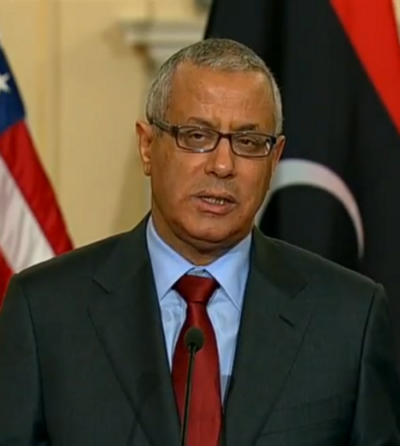
Ali Zeidan
Ali Zeidan is a Libyan politician. Born December 15, 1950, in Waddan. Positions held include Prime Minister of Libya (2012–2014). Educated at Jawaharlal Nehru University.
Facts
9 facts · 0 confirmed by two sources · 0 cited · 8 from one source · 1 where the sources disagree
What’s different
- Born: we show December 15, 1950 (Sources disagree). Wikipedia says December 5, 1950
Where this comes from
Papalocal keeps its own record. It started from these sources; what each one said is kept here as it was copied, so a change on their side never changes this page by itself. Tap one to read its version.
What Wikidata says · copied November 16, 2026 · revision 2569149488
- Described as
- Libyan politician (born 1950)
- Born
- December 15, 1950 · 1 reference
- Born in
- Waddan
- Citizen of
- Libya
- Occupation
- politician; diplomat
- Positions held
- Prime Minister of Libya (2012–2014)
- Political party
- National Forces Alliance
- Education
- Jawaharlal Nehru University
- Religion
- Sunni Islam
- Wikipedias with a page
- 30
Wikidata item Q57847 (wikidata.org/wiki/Q57847), public domain (CC0). Copied November 16, 2026.
What Wikipedia says · copied November 16, 2026 · revision 1378214314
Ali Zeidan (sometimes written as Zidan; Arabic: علي زيدان; born 5 December 1950) is a former prime minister of Libya. He was appointed by the General National Congress on 14 October 2012, and took office on 14 November after Congress approved his cabinet nominees. Prior to the Libyan Civil War, Zeidan was a Geneva-based human rights lawyer. According to the BBC, he is considered by some local observers as a strong-minded liberal. He was ousted by the parliament committee and fled from Libya on 14 March 2014. However, he told a press conference in Rabat, Morocco, that the ousting was invalid.
- Born, in its opening lines
- December 5, 1950
From the Wikipedia article “Ali Zeidan” (en.wikipedia.org/wiki/Ali_Zeidan), by its contributors, under CC BY-SA 4.0 (creativecommons.org/licenses/by-sa/4.0/). Copied November 16, 2026; not changed.
Confirmed Two sources agree. Cited One source, and it names where it got it. One source One source, without a reference of its own. Sources disagree The sources disagree. We show the best-supported value and keep theirs below.
