
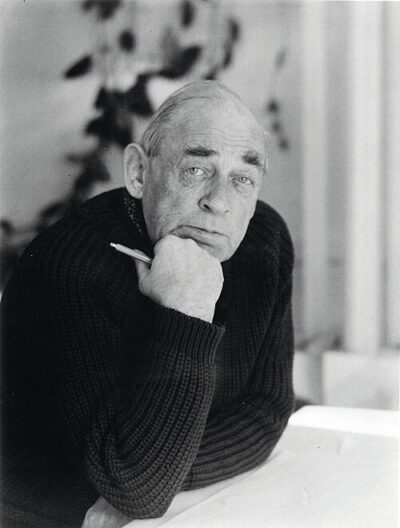
Alvar Aalto
Alvar Aalto was a Finnish architect and designer. Born February 3, 1898, in Kuortane. Died May 11, 1976, in Helsinki. Known for Vyborg Library, Finlandia Hall and Baker House. Educated at Helsinki University of Technology and Jyväskylän Lyseon lukio. Awards include Royal Gold Medal, Prince Eugen Medal and Pour le Mérite for Sciences and Arts order.
Facts
49 facts · 2 confirmed by two sources · 16 cited · 31 from one source
Where this comes from
Papalocal keeps its own record. It started from these sources; what each one said is kept here as it was copied, so a change on their side never changes this page by itself. Tap one to read its version.
What Wikidata says · copied November 16, 2026 · revision 2568953904
- Described as
- Finnish architect and designer (1898–1976)
- Other names
- Hugo Alvar Henrik Aalto
- Born
- February 3, 1898 · 24 references
- Died
- May 11, 1976 · 17 references
- Born in
- Kuortane · 2 references
- Died in
- Helsinki · 6 references
- Buried in
- Hietaniemi cemetery · 3 references
- Cause of death
- cardiovascular disease
- Citizen of
- Finland (1917–) · 2 references; Grand Duchy of Finland (–1917)
- Occupation
- architect · 5 references; designer · 3 references; urban planner; artist · 1 reference
- Education
- Helsinki University of Technology (1916–1921) · 1 reference; Jyväskylän Lyseon lukio
- Member of
- American Academy of Arts and Sciences; Congrès International d'Architecture Moderne (1928–) · 1 reference; Koninklijke Vlaamse Academie van België voor Wetenschappen en Kunsten · 1 reference; Accademia delle Arti del Disegno
- Genre
- modernism · 1 reference
- Known for
- Vyborg Library · 1 reference; Finlandia Hall; Baker House · 1 reference; Paimio Sanatorium · 1 reference; Säynätsalo Town Hall · 1 reference; Helsinki University of Technology Main Building; Aalto Theatre · 1 reference; Aalto Vase; Paimio Chair; Model 60 stacking stool
- Awards
- Royal Gold Medal (1957); Prince Eugen Medal (1954) · 1 reference; Pour le Mérite for Sciences and Arts order (1969) · 1 reference; Alvar Aalto Medal (1967); AIA Gold Medal (1963); Fellow of the American Academy of Arts and Sciences; Austrian Decoration for Science and Art (1974); honorary doctor of the Vienna Technical University (1965); Honorary Royal Designer for Industry (1947) · 1 reference; Commander of the Order of the Lion of Finland (1943) · 1 reference; Officer of the Legion of Honour · 1 reference; Knight Grand Officer of the Order of the Dannebrog · 1 reference; Knight Grand Cross of the Order of the Falcon (1972) · 1 reference; Order of Merit of the Federal Republic of Germany · 1 reference; Grand Cross of the Order of the Lion of Finland (1965) · 1 reference
- Field
- architecture · 1 reference
- Spouse
- Aino Aalto (1924–1949) · 2 references; Elissa Aalto (1952–1976) · 1 reference
- Lived in
- Villa Aalto
- Website
- https://www.alvaraalto.fi
- Wikipedias with a page
- 97
Wikidata item Q82840 (wikidata.org/wiki/Q82840), public domain (CC0). Copied November 16, 2026.
What Wikipedia says · copied November 16, 2026 · revision 1385832836
Hugo Alvar Henrik Aalto (Finnish: [ˈhuːɡo ˈɑlʋɑr ˈhenrik ˈɑːlto]; 3 February 1898 – 11 May 1976) was a Finnish architect and designer. His work includes architecture, furniture, textiles and glassware, as well as sculptures and paintings. He never regarded himself as an artist, seeing painting and sculpture as "branches of the tree whose trunk is architecture." Aalto's early career ran in parallel with the rapid economic growth and industrialization of Finland during the first half of the 20th century. Many of his clients were industrialists, among them the Ahlström-Gullichsen family, who became his patrons. The span of his career, from the 1920s to the 1970s, is reflected in the styles of his work, ranging from Nordic Classicism of the early work, to a rational International Style Modernism during the 1930s to a more organic modernist style from the 1940s onwards.
His architectural work, throughout his entire career, is characterized by a concern for design as Gesamtkunstwerk—a total work of art in which he, together with his first wife Aino Aalto, would design not only the building but the interior surfaces, furniture, lamps, and glassware as well. His furniture designs are considered Scandinavian Modern, an aesthetic reflected in their elegant simplification and concern for materials, especially wood, but also in Aalto's technical innovations, which led him to receiving patents for various manufacturing processes, such as those used to produce bent wood. As a designer he is celebrated as a forerunner of midcentury modernism in design; his invention of bent plywood furniture had a profound impact on the aesthetics of Charles and Ray Eames and George Nelson. The Alvar Aalto Museum, designed by Aalto himself, is located in what is regarded as his home city, Jyväskylä.
The entry for him on the Museum of Modern Art website notes his "remarkable synthesis of romantic and pragmatic ideas," addingHis work reflects a deep desire to humanize architecture through an unorthodox handling of form and materials that was both rational and intuitive. Influenced by the so-called International Style modernism (or functionalism, as it was called in Finland) and his acquaintance with leading modernists in Europe, including Swedish architect Erik Gunnar Asplund and many of the artists and architects associated with the Bauhaus, Aalto created designs that had a profound impact on the trajectory of modernism before and after World War II.
- Born, in its opening lines
- February 3, 1898
- Died, in its opening lines
- May 11, 1976
From the Wikipedia article “Alvar Aalto” (en.wikipedia.org/wiki/Alvar_Aalto), by its contributors, under CC BY-SA 4.0 (creativecommons.org/licenses/by-sa/4.0/). Copied November 16, 2026; not changed.
Confirmed Two sources agree. Cited One source, and it names where it got it. One source One source, without a reference of its own. Sources disagree The sources disagree. We show the best-supported value and keep theirs below.
