
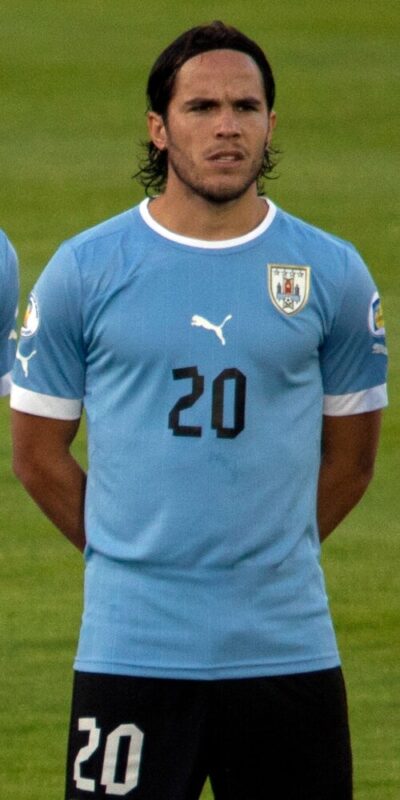
Álvaro Rafael González
Álvaro Rafael González is an Uruguayan footballer. Born October 29, 1984, in Montevideo. Teams include Club Nacional de Football (2 times) (2009–), Boca Juniors (2007–2009) and SS Lazio (2010–2015).
Facts
14 facts · 1 confirmed by two sources · 0 cited · 13 from one source
Where this comes from
Papalocal keeps its own record. It started from these sources; what each one said is kept here as it was copied, so a change on their side never changes this page by itself. Tap one to read its version.
What Wikidata says · copied November 16, 2026 · revision 2546255088
- Described as
- Uruguayan footballer
- Other names
- Álvaro González, Alvaro Rafael Gonzalez, Alvaro Gonzalez, Álvaro Rafael González Luengo
- Born
- October 29, 1984 · 3 references
- Born in
- Montevideo
- Name at birth
- Álvaro Rafael González Luengo
- Citizen of
- Uruguay
- Occupation
- association football player
- Teams
- Club Nacional de Football (2 times) (2009–); Boca Juniors (2007–2009); SS Lazio (2010–2015); Defensor Sporting Club (2003–2007); Torino FC (2015); Atlas F.C. (2015–2016); Uruguay men's national football team (2006–)
- Sport
- association football
- Height
- 1.76 m (5 ft 9 in)
- Wikipedias with a page
- 35
Wikidata item Q1380874 (wikidata.org/wiki/Q1380874), public domain (CC0). Copied November 16, 2026.
What Wikipedia says · copied November 16, 2026 · revision 1384894908
Álvaro Rafael González Luengo (Spanish pronunciation: [ˈalβaɾo rafaˈel ɣonˈsales]; born 29 October 1984), nicknamed "Tata" is a former Uruguayan professional footballer who played as a midfielder. A Uruguayan international on 72 occasions since 2006, he represented his nation for one World Cup and three Copa América tournaments.
- Born, in its opening lines
- October 29, 1984
From the Wikipedia article “Álvaro González (footballer, born 1984)” (en.wikipedia.org/wiki/Álvaro_González_(footballer,_born_1984)), by its contributors, under CC BY-SA 4.0 (creativecommons.org/licenses/by-sa/4.0/). Copied November 16, 2026; not changed.
Confirmed Two sources agree. Cited One source, and it names where it got it. One source One source, without a reference of its own. Sources disagree The sources disagree. We show the best-supported value and keep theirs below.
