
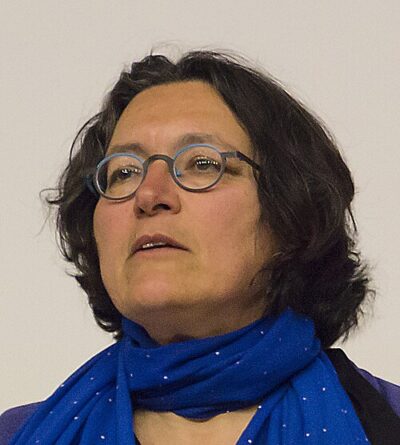
Amira Hass
Amira Hass is an Israeli journalist. Born June 28, 1956, in Jerusalem. Educated at Hebrew University of Jerusalem. Awards include Bruno Kreisky Award for Services to Human Rights, Reporters Without Borders Prize and UNESCO/Guillermo Cano World Press Freedom Prize.
Facts
18 facts · 1 confirmed by two sources · 4 cited · 13 from one source
Where this comes from
Papalocal keeps its own record. It started from these sources; what each one said is kept here as it was copied, so a change on their side never changes this page by itself. Tap one to read its version.
What Wikidata says · copied November 18, 2026 · revision 2568487246
- Described as
- Israeli journalist
- Born
- June 28, 1956
- Born in
- Jerusalem · 1 reference
- Citizen of
- Israel
- Occupation
- writer · 1 reference; journalist · 1 reference; opinion journalist
- Worked for
- Haaretz
- Education
- Hebrew University of Jerusalem
- Awards
- Bruno Kreisky Award for Services to Human Rights; Reporters Without Borders Prize (2009); UNESCO/Guillermo Cano World Press Freedom Prize (2003); Prince Claus Award; Anna Lindh Memorial Fund; International Press Institute World Press Freedom Heroes (2000); IWMF Lifetime Achievement Award (2009) · 1 reference
- Mother
- Hanna Levy-Hass
- Lived in
- Ramallah; Tel Aviv
- Wikipedias with a page
- 21
Wikidata item Q446813 (wikidata.org/wiki/Q446813), public domain (CC0). Copied November 18, 2026.
What Wikipedia says · copied November 18, 2026 · revision 1383039915
Amira Hass (Hebrew: עמירה הס; born 28 June 1956) is an Israeli journalist, columnist, activist, and author, mostly known for her columns in the daily newspaper Haaretz covering Palestinian affairs in Gaza and the West Bank, where she has lived for almost thirty years.
- Born, in its opening lines
- June 28, 1956
From the Wikipedia article “Amira Hass” (en.wikipedia.org/wiki/Amira_Hass), by its contributors, under CC BY-SA 4.0 (creativecommons.org/licenses/by-sa/4.0/). Copied November 18, 2026; not changed.
Confirmed Two sources agree. Cited One source, and it names where it got it. One source One source, without a reference of its own. Sources disagree The sources disagree. We show the best-supported value and keep theirs below.
