
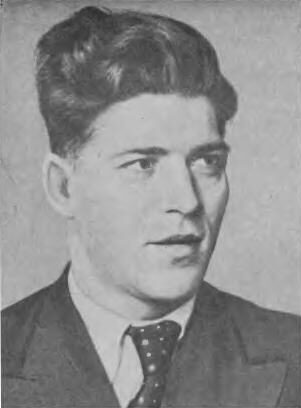
Andor Lilienthal
Andor Lilienthal was a Hungarian chess player. Born May 5, 1911, in Moscow. Died May 8, 2010, in Budapest. Awards include Order of the Badge of Honour, Honoured Master of Sports of the USSR and Officer's Cross of the Hungarian Order of Merit.
Facts
12 facts · 2 confirmed by two sources · 1 cited · 9 from one source
Where this comes from
Papalocal keeps its own record. It started from these sources; what each one said is kept here as it was copied, so a change on their side never changes this page by itself. Tap one to read its version.
What Wikidata says · copied November 16, 2026 · revision 2568990882
- Described as
- Hungarian chess player (1911–2010)
- Born
- May 5, 1911
- Died
- May 8, 2010 · 1 reference
- Born in
- Moscow · 1 reference
- Died in
- Budapest
- Buried in
- Kozma Street Jewish Cemetery
- Citizen of
- Soviet Union; Hungary
- Occupation
- chess player
- Sport
- chess
- Awards
- Order of the Badge of Honour; Honoured Master of Sports of the USSR; Officer's Cross of the Hungarian Order of Merit
- Wikipedias with a page
- 32
Wikidata item Q113167 (wikidata.org/wiki/Q113167), public domain (CC0). Copied November 16, 2026.
What Wikipedia says · copied November 16, 2026 · revision 1375762738
Andor (André, Andre, Andrei) Arnoldovich Lilienthal (5 May 1911 – 8 May 2010) was a Hungarian and Soviet chess player. In his long career, he played against ten male and female world champions, beating Emanuel Lasker, José Raúl Capablanca, Alexander Alekhine, Max Euwe, Mikhail Botvinnik, Vasily Smyslov, and Vera Menchik.
At the time of his death, he was the oldest living grandmaster (since surpassed by Juraj Nikolac), and the last surviving person from the original group of grandmasters awarded the title by FIDE in 1950.
- Born, in its opening lines
- May 5, 1911
- Died, in its opening lines
- May 8, 2010
From the Wikipedia article “Andor Lilienthal” (en.wikipedia.org/wiki/Andor_Lilienthal), by its contributors, under CC BY-SA 4.0 (creativecommons.org/licenses/by-sa/4.0/). Copied November 16, 2026; not changed.
Confirmed Two sources agree. Cited One source, and it names where it got it. One source One source, without a reference of its own. Sources disagree The sources disagree. We show the best-supported value and keep theirs below.
