
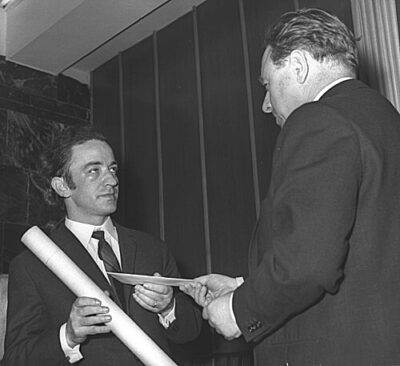
André Schwarz-Bart
André Schwarz-Bart was a French writer. Born May 23, 1928, in Metz. Died September 30, 2006, in Les Abymes. Known for The Last of the Just. Awards include Prix Goncourt, Jerusalem Prize and Officer of Arts and Letters.
Facts
17 facts · 2 confirmed by two sources · 7 cited · 8 from one source
Where this comes from
Papalocal keeps its own record. It started from these sources; what each one said is kept here as it was copied, so a change on their side never changes this page by itself. Tap one to read its version.
What Wikidata says · copied November 18, 2026 · revision 2557763607
- Described as
- French writer (1928–2006)
- Other names
- Andre Schwarz-Bart
- Born
- May 23, 1928 · 2 references
- Died
- September 30, 2006 · 8 references
- Born in
- Metz · 4 references
- Died in
- Les Abymes · 1 reference
- Cause of death
- surgical complications
- Name at birth
- Abraham Szwarcbart · 1 reference
- Citizen of
- France · 1 reference
- Occupation
- writer · 1 reference; novelist; French resistance fighter
- Known for
- The Last of the Just
- Awards
- Prix Goncourt (1959); Jerusalem Prize (1967); Officer of Arts and Letters · 1 reference; Bancarella Literary Prize (1961) · 1 reference
- Spouse
- Simone Schwarz-Bart · 1 reference
- Children
- Jacques Schwarz-Bart · 1 reference
- Wikipedias with a page
- 21
Wikidata item Q427503 (wikidata.org/wiki/Q427503), public domain (CC0). Copied November 18, 2026.
What Wikipedia says · copied November 18, 2026 · revision 1374117723
André Schwarz-Bart (May 23, 1928 – September 30, 2006) was a French novelist of Polish-Jewish ancestry. He was awarded the Prix Goncourt for his debut novel in 1959, and the 1967 Jerusalem Prize.
- Born, in its opening lines
- May 23, 1928
- Died, in its opening lines
- September 30, 2006
From the Wikipedia article “André Schwarz-Bart” (en.wikipedia.org/wiki/André_Schwarz-Bart), by its contributors, under CC BY-SA 4.0 (creativecommons.org/licenses/by-sa/4.0/). Copied November 18, 2026; not changed.
Confirmed Two sources agree. Cited One source, and it names where it got it. One source One source, without a reference of its own. Sources disagree The sources disagree. We show the best-supported value and keep theirs below.
