
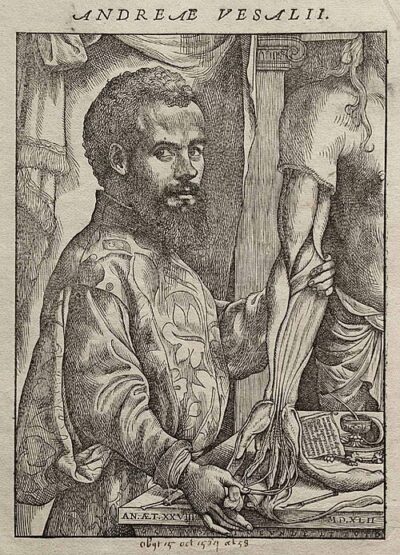
Andreas Vesalius
Andreas Vesalius was a Flemish anatomist, physician and author. Born December 31, 1514, in Mont aux Potences - Galgenberg. Died October 16, 1564, in Zakynthos. Known for De humani corporis fabrica. Educated at University of Paris and University of Padua.
Facts
25 facts · 1 confirmed by two sources · 8 cited · 15 from one source · 1 where the sources disagree
What’s different
- Died: we show October 16, 1564 (Sources disagree). Wikipedia says October 15, 1564
Where this comes from
Papalocal keeps its own record. It started from these sources; what each one said is kept here as it was copied, so a change on their side never changes this page by itself. Tap one to read its version.
What Wikidata says · copied November 16, 2026 · revision 2568005691
- Described as
- Flemish anatomist, physician and author (1514–1564)
- Other names
- Vesalius, Andreas, 1514-1564, Andries van Wesel, Vesalius, Andreas van Wesel, Andreas Vesalio o Vesalius, Andreas de Wesalia
- Born
- December 31, 1514 · 2 references
- Died
- October 16, 1564
- Born in
- Mont aux Potences - Galgenberg · 1 reference
- Died in
- Zakynthos
- Name at birth
- Andries Wytinck van Wesel
- Citizen of
- Habsburg Netherlands
- Occupation
- anatomist · 1 reference; physician · 1 reference; surgeon · 1 reference; university teacher; physiologist · 1 reference; writer · 1 reference; personal physician · 1 reference
- Worked for
- University of Padua; University of Pisa; University of Bologna
- Education
- University of Paris; University of Padua; Old University of Leuven
- Known for
- De humani corporis fabrica
- Field
- anatomy · 1 reference; medicine · 1 reference; surgery
- Spouse
- Anne van Hamme
- Father
- Everaert van Wezel
- Wikipedias with a page
- 84
Wikidata item Q170267 (wikidata.org/wiki/Q170267), public domain (CC0). Copied November 16, 2026.
What Wikipedia says · copied November 16, 2026 · revision 1385565490
Andries van Wezel (31 December 1514 – 15 October 1564), Latinized as Andreas Vesalius (), was an anatomist and physician who wrote De Humani Corporis Fabrica Libri Septem (On the fabric of the human body in seven books), which is considered one of the most influential books on human anatomy and a major advance over the long-dominant work of Galen. Vesalius is often referred to as the founder of modern human anatomy. He was born in Brussels, which was then part of the Habsburg Netherlands. He was a professor at the University of Padua (1537–1542) and later became Imperial physician at the court of Emperor Charles V.
- Born, in its opening lines
- December 31, 1514
- Died, in its opening lines
- October 15, 1564
From the Wikipedia article “Andreas Vesalius” (en.wikipedia.org/wiki/Andreas_Vesalius), by its contributors, under CC BY-SA 4.0 (creativecommons.org/licenses/by-sa/4.0/). Copied November 16, 2026; not changed.
Confirmed Two sources agree. Cited One source, and it names where it got it. One source One source, without a reference of its own. Sources disagree The sources disagree. We show the best-supported value and keep theirs below.
