
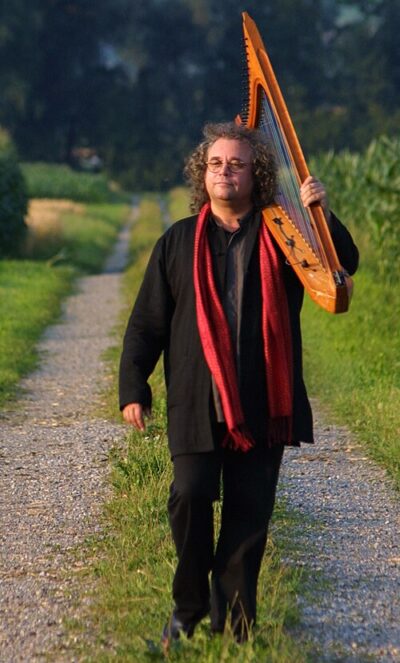
Andreas Vollenweider
Andreas Vollenweider is a Swiss musician. Born October 4, 1953, in Zurich. Awards include Grammy Award for Best New Age Album.
Facts
18 facts · 1 confirmed by two sources · 9 cited · 8 from one source
Where this comes from
Papalocal keeps its own record. It started from these sources; what each one said is kept here as it was copied, so a change on their side never changes this page by itself. Tap one to read its version.
What Wikidata says · copied November 18, 2026 · revision 2563744724
- Described as
- Swiss musician
- Born
- October 4, 1953 · 2 references
- Born in
- Zurich · 1 reference
- Citizen of
- Switzerland
- Occupation
- composer · 2 references; singer; jazz musician; harpist · 2 references; musician · 2 references
- Genre
- world music · 1 reference; new age music
- Instrument
- harp · 1 reference; voice · 1 reference; synthesizer · 1 reference
- Record label
- Edel Records; Columbia Records
- Awards
- Grammy Award for Best New Age Album (1987)
- Father
- Hans Vollenweider · 1 reference
- Website
- https://www.vollenweider.com
- Wikipedias with a page
- 23
Wikidata item Q458828 (wikidata.org/wiki/Q458828), public domain (CC0). Copied November 18, 2026.
What Wikipedia says · copied November 18, 2026 · revision 1361229737
Andreas Vollenweider (born 4 October 1953) is a Swiss harpist. He is generally categorised as a new-age musician and uses a modified electroacoustic harp of his own design. He has worked with Bobby McFerrin, Carly Simon, Luciano Pavarotti and in 1987 received a Grammy Award for the album Down to the Moon. Vollenweider's style has been described by The New York Times as "swirling atmospheric music, which evokes nature, magic and fairy tales".
- Born, in its opening lines
- October 4, 1953
From the Wikipedia article “Andreas Vollenweider” (en.wikipedia.org/wiki/Andreas_Vollenweider), by its contributors, under CC BY-SA 4.0 (creativecommons.org/licenses/by-sa/4.0/). Copied November 18, 2026; not changed.
Confirmed Two sources agree. Cited One source, and it names where it got it. One source One source, without a reference of its own. Sources disagree The sources disagree. We show the best-supported value and keep theirs below.
