
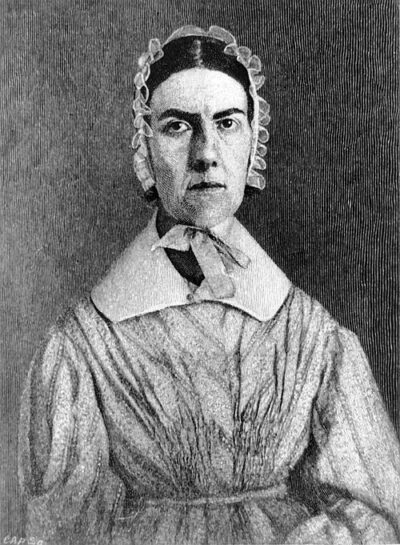
Angelina Grimké
Angelina Grimké was an American abolitionist and feminist. Born February 20, 1805, in Charleston. Died October 26, 1879, in Hyde Park. Awards include National Women's Hall of Fame.
Facts
21 facts · 2 confirmed by two sources · 8 cited · 11 from one source
What’s different
- Born: we show February 20, 1805 (Confirmed). Wikidata also lists February 21, 1805
Where this comes from
Papalocal keeps its own record. It started from these sources; what each one said is kept here as it was copied, so a change on their side never changes this page by itself. Tap one to read its version.
What Wikidata says · copied November 16, 2026 · revision 2568776422
- Described as
- American abolitionist and feminist
- Other names
- Angelina Emily Grimké Weld, Angelina Grimke, Angelina Emily Grimke Weld
- Born
- February 20, 1805 · 3 references; February 21, 1805 · 2 references
- Died
- October 26, 1879 · 3 references
- Born in
- Charleston · 1 reference
- Died in
- Hyde Park
- Name at birth
- Angelina Emily Grimké · 1 reference
- Citizen of
- United States
- Occupation
- politician; abolitionist · 1 reference; writer · 2 references; feminist · 1 reference
- Member of
- Grimké sisters
- Awards
- National Women's Hall of Fame (1998) · 1 reference
- Spouse
- Theodore Dwight Weld · 1 reference
- Children
- Stuart F. Weld; Sarah Grimké Weld Hamilton
- Father
- John Faucheraud Grimké
- Mother
- Mary Smith Grimké
- Siblings
- Sarah Grimké · 1 reference; Thomas Smith Grimké; Henry W. Grimké; Frederick Grimke
- Wikipedias with a page
- 22
Wikidata item Q2849426 (wikidata.org/wiki/Q2849426), public domain (CC0). Copied November 16, 2026.
What Wikipedia says · copied November 16, 2026 · revision 1378402115
Angelina Emily Grimké Weld (February 20, 1805 – October 26, 1879) was an American abolitionist, political activist, women's rights advocate, and supporter of the women's suffrage movement. At one point she was the best known, or "most notorious," woman in the country. She and her sister Sarah Moore Grimké were considered the only notable examples of white Southern women abolitionists. The sisters lived together as adults, while Angelina was the wife of abolitionist leader Theodore Dwight Weld.
Although raised in Charleston, South Carolina, Angelina and Sarah spent their entire adult lives in the North. Angelina's greatest fame was between 1835, when William Lloyd Garrison published a letter of hers in his anti-slavery newspaper The Liberator, and May 1838, when she gave a speech to abolitionists with a hostile, noisy, stone-throwing crowd outside Pennsylvania Hall. The essays and speeches she produced in that period were incisive arguments to end slavery and to advance women's rights.
Drawing her views from natural rights theory (as set forth in the Declaration of Independence), the United States Constitution, Christian beliefs in the Bible, and her own childhood memories of the cruel slavery and racism in the South, Grimké proclaimed the injustice of denying freedom to any man or woman. When challenged for speaking in public to mixed audiences of men and women in 1837, she and her sister Sarah fiercely defended women's right to make speeches and participate in political discourse.
In May 1838, Angelina married Theodore Dwight Weld, a prominent abolitionist. They lived in New Jersey with her sister Sarah and raised three children, Charles Stuart (1839), Theodore Grimké (1841), and Sarah Grimké Weld (1844). They earned a living by running two schools, the latter located in the Raritan Bay Union utopian community. After the Civil War ended, the Grimké–Weld household moved to Hyde Park, Massachusetts, where they spent their final years. Angelina and Sarah were active in the Massachusetts Woman Suffrage Association.
- Born, in its opening lines
- February 20, 1805
- Died, in its opening lines
- October 26, 1879
From the Wikipedia article “Angelina Grimké” (en.wikipedia.org/wiki/Angelina_Grimké), by its contributors, under CC BY-SA 4.0 (creativecommons.org/licenses/by-sa/4.0/). Copied November 16, 2026; not changed.
Confirmed Two sources agree. Cited One source, and it names where it got it. One source One source, without a reference of its own. Sources disagree The sources disagree. We show the best-supported value and keep theirs below.
