
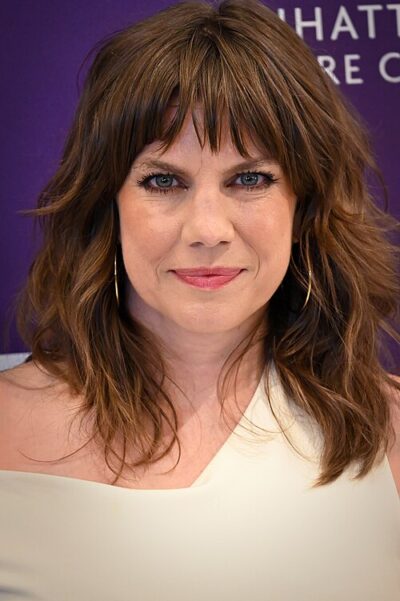
Anna Chlumsky
Anna Chlumsky is an American actress. Born December 3, 1980, in Chicago. Educated at University of Chicago.
Facts
9 facts · 1 confirmed by two sources · 6 cited · 2 from one source
Where this comes from
Papalocal keeps its own record. It started from these sources; what each one said is kept here as it was copied, so a change on their side never changes this page by itself. Tap one to read its version.
What Wikidata says · copied November 15, 2026 · revision 2567915879
- Described as
- American actress (born 1980)
- Other names
- Anna M. Chlumsky, Anna Maria Chlumsky
- Born
- December 3, 1980 · 2 references
- Born in
- Chicago · 1 reference
- Citizen of
- United States
- Occupation
- film actor · 1 reference; stage actor · 1 reference; television actor · 1 reference; actor · 2 references
- Education
- University of Chicago
- Spouse
- Shaun So · 2 references
- Wikipedias with a page
- 39
Wikidata item Q234201 (wikidata.org/wiki/Q234201), public domain (CC0). Copied November 15, 2026.
What Wikipedia says · copied November 15, 2026 · revision 1380140344
Anna Maria Chlumsky ( KLUM-skee; born December 3, 1980) is an American actress. She began acting as a child, and first became known for playing Vada Sultenfuss in the film My Girl (1991) and its sequel, My Girl 2 (1994). Following her early roles, she went on hiatus from 1999 to 2005 to attend college.
Chlumsky returned to acting with roles in several independent films, including Blood Car (2007) and In the Loop (2009). She portrayed Amy Brookheimer on the HBO television series Veep (2012–2019), which earned her six nominations for the Primetime Emmy Award for Outstanding Supporting Actress in a Comedy Series, among other accolades.
- Born, in its opening lines
- December 3, 1980
From the Wikipedia article “Anna Chlumsky” (en.wikipedia.org/wiki/Anna_Chlumsky), by its contributors, under CC BY-SA 4.0 (creativecommons.org/licenses/by-sa/4.0/). Copied November 15, 2026; not changed.
Confirmed Two sources agree. Cited One source, and it names where it got it. One source One source, without a reference of its own. Sources disagree The sources disagree. We show the best-supported value and keep theirs below.
