
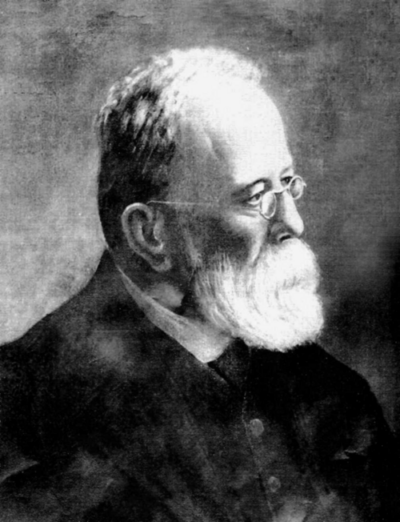
Anselmo Lorenzo was a Spanish author. Born April 21, 1841, in Toledo. Died November 30, 1914, in Barcelona.
Facts
15 facts · 2 confirmed by two sources · 4 cited · 9 from one source
Where this comes from
Papalocal keeps its own record. It started from these sources; what each one said is kept here as it was copied, so a change on their side never changes this page by itself. Tap one to read its version.
What Wikidata says · copied November 18, 2026 · revision 2552245664
- Described as
- Spanish author
- Other names
- Anselmo Lorenzo Asperilla
- Born
- April 21, 1841 · 2 references
- Died
- November 30, 1914 · 2 references
- Born in
- Toledo
- Died in
- Barcelona
- Buried in
- Montjuïc Cemetery
- Name at birth
- Anselmo Lorenzo Asperilla
- Citizen of
- Spain · 1 reference
- Occupation
- anarcho-syndicalist; trade unionist; typesetter; anarchist · 1 reference; writer · 1 reference; union member · 1 reference
- Member of
- Confederación Nacional del Trabajo; International Workingmen's Association
- Wikipedias with a page
- 21
Wikidata item Q174770 (wikidata.org/wiki/Q174770), public domain (CC0). Copied November 18, 2026.
What Wikipedia says · copied November 18, 2026 · revision 1371709623
Anselmo Lorenzo Asperilla (21 April 1841 – 30 November 1914) was a Spanish anarchist activist and writer. He is known for his leading role in the early stages of the Spanish anarchist movement, for which he became known as "the grandfather of Spanish anarchism".
Lorenzo was first exposed to radical politics in the 1860s, when he was introduced to republicanism and federalism. Following the Glorious Revolution of 1868, he became a founding member of the Spanish Regional Federation of the International Workingmen's Association (FRE-AIT) and was elected to its federal council at the 1870 Barcelona Workers' Congress. He was at the centre of a split between the anarchist and Marxist factions of the AIT, which culminated in him resigning as the organisation's general secretary. He then established a number of clandestine cells of the AIT in Andalusia, which became the nuclei for revolutionary activity during the Cantonal Revolution. After the suppression of the revolution, he came into conflict with the AIT's moderate faction of syndicalists, who forced him out of the organisation before reorganising it into the Federation of Workers of the Spanish Region (FTRE).
During the 1880s, Lorenzo turned to writing and became an exponent of the theory of anarchism without adjectives, which advocated for an end to political infighting in the anarchist movement. In 1894, he launched his own newspaper, La Ciencia Social, but it was shut down during the Montjuïc trials and he fled into exile. Following the Spanish defeat in the Spanish-American War, Lorenzo called for anarchists to adopt a new strategy and formulated the tendency of anarcho-syndicalism. He also became involved in the Barcelona Modern School and observed the Tragic Week uprising. In 1910, Lorenzo participated in the foundation of the National Confederation of Labour (CNT), which went on to become the predominant anarchist organisation in Spain. He died following the outbreak of World War I.
- Born, in its opening lines
- April 21, 1841
- Died, in its opening lines
- November 30, 1914
From the Wikipedia article “Anselmo Lorenzo” (en.wikipedia.org/wiki/Anselmo_Lorenzo), by its contributors, under CC BY-SA 4.0 (creativecommons.org/licenses/by-sa/4.0/). Copied November 18, 2026; not changed.
Confirmed Two sources agree. Cited One source, and it names where it got it. One source One source, without a reference of its own. Sources disagree The sources disagree. We show the best-supported value and keep theirs below.
