
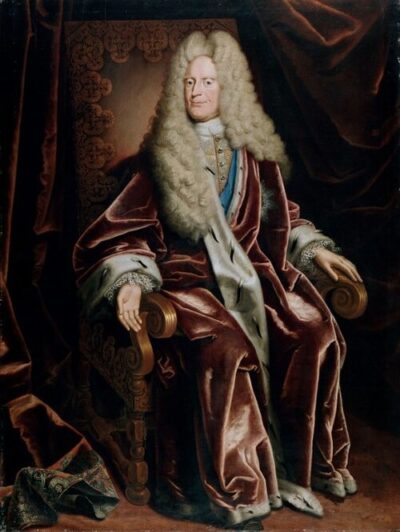
Anthony Ulrich, Duke of Brunswick-Wolfenbüttel
Anthony Ulrich, Duke of Brunswick-Wolfenbüttel was a Duke of Brunswick-Lüneburg and ruling Prince of Brunswick-Wolfenbüttel. Born October 4, 1633, in Hitzacker. Died March 27, 1714, in Salzdahlum. Positions held include Fürst (1685–1714). Educated at University of Helmstedt. Awards include Knight of the Order of the Elephant.
Facts
41 facts · 2 confirmed by two sources · 16 cited · 23 from one source
Where this comes from
Papalocal keeps its own record. It started from these sources; what each one said is kept here as it was copied, so a change on their side never changes this page by itself. Tap one to read its version.
What Wikidata says · copied November 18, 2026 · revision 2569055047
- Described as
- Duke of Brunswick-Lüneburg and ruling Prince of Brunswick-Wolfenbüttel (1633-1714)
- Other names
- hertog van Braunschweig-Wolfenbüttel Anton Ulrich, duc de Brunswick Antoine Ulrich, Herzog von Braunschweig und Wolfenbüttel Anton Ulrich, Serenissimus, Anton Ulrich von Braunschweig-Wolfenbüttel, Herzog Anton Ulrich Braunschweig-Lüneburg, Herzog von Braunschweig-Wolfenbüttel Anton Ulrich, Anton Ulrich von Braunschweig-Lüneburg, duc de Brunswick-Wolfenbüttel Anton Ulrich, Duke of Brunswick-Wolfenbüttel Anton Ulrich, hertig av Braunschweig-Wolfenbüttel Anton Ulrich, Antoine Ulrich duc de Brunswick-Lunebourg
- Born
- October 4, 1633 · 5 references
- Died
- March 27, 1714 · 4 references
- Born in
- Hitzacker
- Died in
- Salzdahlum
- Buried in
- Marienkirche
- Citizen of
- Germany · 1 reference
- Occupation
- poet; writer · 1 reference; politician · 1 reference; patron of the arts · 1 reference; art collector · 1 reference
- Positions held
- Fürst (1685–1714)
- Education
- University of Helmstedt
- Member of
- Fruitbearing Society (1659–) · 1 reference
- Awards
- Knight of the Order of the Elephant (1692)
- Field
- politics · 1 reference; Age of Enlightenment · 1 reference; literature · 1 reference; opera · 1 reference
- Spouse
- Elizabeth Juliana of Schleswig-Holstein-Sønderburg-Nordborg (1656–1704) · 1 reference
- Children
- Elisabeth Eleonore of Brunswick-Wolfenbüttel; Augustus William, Duke of Brunswick-Lüneburg; Augusta Dorothea of Brunswick-Wolfenbüttel; Louis Rudolph, Duke of Brunswick-Lüneburg; Anna Sophia of Brunswick-Wolfenbüttel; Henriette Christine von Braunschweig-Wolfenbüttel; August Friedrich von Braunschweig-Wolfenbüttel · 1 reference; Leopold August von Braunschweig-Wolfenbüttel · 1 reference; August Heinrich von Braunschweig-Wolfenbüttel · 1 reference; August Karl von Braunschweig-Wolfenbüttel · 1 reference; August Franz von Braunschweig-Wolfenbüttel · 1 reference; Amelie von Braunschweig-Wolfenbüttel · 1 reference
- Father
- Augustus the Younger, Duke of Brunswick-Lüneburg
- Mother
- Dorothea of Anhalt-Zerbst
- Siblings
- Marie Elisabeth of Brunswick-Wolfenbüttel; Clara Augusta Brunswick-Luneburg; Sibylle Ursula of Brunswick-Wolfenbüttel; Ferdinand Albert I, Duke of Brunswick-Lüneburg; Rudolph Augustus, Duke of Brunswick-Lüneburg
- Religion
- Lutheranism; Catholicism
- Wikipedias with a page
- 20
Wikidata item Q61213 (wikidata.org/wiki/Q61213), public domain (CC0). Copied November 18, 2026.
What Wikipedia says · copied November 18, 2026 · revision 1383735713
Anthony Ulrich (German: Anton Ulrich; 4 October 1633 – 27 March 1714), a member of the House of Welf, was Duke of Brunswick-Lüneburg and ruling Prince of Brunswick-Wolfenbüttel from 1685 until 1702 jointly with his elder brother Rudolph Augustus, and solely from 1704 until his death. He was one of the main proponents of enlightened absolutism among the Brunswick dukes.
- Born, in its opening lines
- October 4, 1633
- Died, in its opening lines
- March 27, 1714
From the Wikipedia article “Anthony Ulrich, Duke of Brunswick” (en.wikipedia.org/wiki/Anthony_Ulrich,_Duke_of_Brunswick), by its contributors, under CC BY-SA 4.0 (creativecommons.org/licenses/by-sa/4.0/). Copied November 18, 2026; not changed.
Confirmed Two sources agree. Cited One source, and it names where it got it. One source One source, without a reference of its own. Sources disagree The sources disagree. We show the best-supported value and keep theirs below.
