
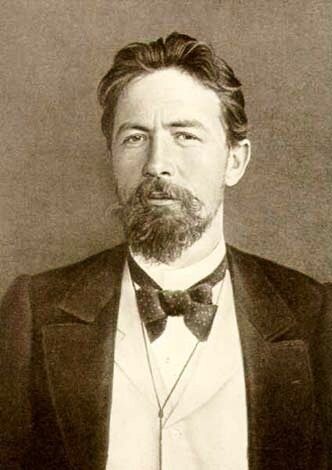
Anton Chekhov
Anton Chekhov was a Russian dramatist and author. Born January 29, 1860, in Taganrog. Died July 15, 1904, in Badenweiler. Known for The Cherry Orchard, Uncle Vanya and Vanka. Educated at Medical faculty of Moscow University and Chekhov Gymnasium. Awards include Order of Saint Stanislaus, 3rd class, Pushkin Prize and Medal for works on the first general census.
Facts
48 facts · 2 confirmed by two sources · 17 cited · 29 from one source
Where this comes from
Papalocal keeps its own record. It started from these sources; what each one said is kept here as it was copied, so a change on their side never changes this page by itself. Tap one to read its version.
What Wikidata says · copied November 16, 2026 · revision 2567815703
- Described as
- Russian dramatist and author (1860–1904)
- Other names
- Antón Pávlovich Chékhov, Antón Pávlovič Čéhov, Chekhov, Anton Pavlovich Chekhov
- Born
- January 29, 1860 · 1 reference
- Died
- July 15, 1904 · 10 references
- Born in
- Taganrog · 7 references
- Died in
- Badenweiler · 5 references
- Buried in
- Novodevichy Cemetery · 3 references
- Cause of death
- tuberculosis · 1 reference
- Name at birth
- Антонъ Павловичъ Чеховъ
- Citizen of
- Russian Empire · 1 reference
- Occupation
- physician · 4 references; journalist · 1 reference; writer · 5 references; prose writer; satirist; playwright · 2 references; short story writer; film screenwriter · 1 reference
- Education
- Medical faculty of Moscow University (1879–1884) · 1 reference; Chekhov Gymnasium (1868–1876); I.M. Sechenov First Moscow State Medical University; MSU Faculty
- Genre
- literary realism; short novel
- Known for
- The Cherry Orchard; Uncle Vanya; Vanka; Three Sisters; Fat and Thin; The Seagull; Kashtanka; The Black Monk
- Awards
- Order of Saint Stanislaus, 3rd class; Pushkin Prize (1888); Medal for works on the first general census · 1 reference; Honorary Citizen of the Russian Empire · 1 reference
- Field
- prose · 1 reference; creative and professional writing · 1 reference; drama · 1 reference; medicine · 1 reference; literature · 1 reference; playwriting · 1 reference
- Spouse
- Olga Knipper (1901–1904) · 1 reference
- Father
- Pavel Chekhov · 1 reference
- Mother
- Evgenia Chekhova
- Siblings
- Maria Chekhova; Alexander Chekhov · 1 reference; Nikolai Chekhov; Mikhail Chekhov · 1 reference
- Lived in
- Melikhovo (1892–1898)
- Wikipedias with a page
- 240
Wikidata item Q5685 (wikidata.org/wiki/Q5685), public domain (CC0). Copied November 16, 2026.
What Wikipedia says · copied November 16, 2026 · revision 1378143618
Anton Pavlovich Chekhov (; Russian: Антон Павлович Чехов;
29 January [O.S. 17 January] 1860 – 15 July [O.S. 2 July] 1904) was a Russian playwright, short story writer, and physician. Widely considered one of the greatest writers of all time, his career as a playwright produced four classics, and his best short stories are held in high esteem by writers and critics. Along with Henrik Ibsen and August Strindberg, Chekhov is often referred to as one of the three seminal figures in the birth of early modernism in the theatre. Chekhov was a physician by profession. "Medicine is my lawful wife," he once said, "and literature is my mistress."
Chekhov renounced the theatre after the reception of The Seagull in 1896, but the play was revived to acclaim in 1898 by Konstantin Stanislavski's Moscow Art Theatre, which subsequently also produced Chekhov's Uncle Vanya and premiered his last two plays, Three Sisters and The Cherry Orchard. These four works present a challenge to the acting ensemble as well as to audiences, because in place of conventional action Chekhov offers a "theatre of mood" and a "submerged life in the text."
Chekhov began writing stories to earn money, but as his artistic ambition grew, he made formal innovations that influenced the evolution of the modern short story. He wrote that it is not the duty of writers to solve problems, but to correctly state them.
- Born, in its opening lines
- January 29, 1860
- Died, in its opening lines
- July 15, 1904
From the Wikipedia article “Anton Chekhov” (en.wikipedia.org/wiki/Anton_Chekhov), by its contributors, under CC BY-SA 4.0 (creativecommons.org/licenses/by-sa/4.0/). Copied November 16, 2026; not changed.
Confirmed Two sources agree. Cited One source, and it names where it got it. One source One source, without a reference of its own. Sources disagree The sources disagree. We show the best-supported value and keep theirs below.
