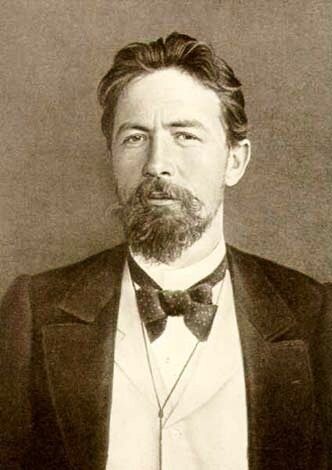
The Cherry Orchard
The Cherry Orchard is a play by Anton Chekhov. It came out in 1904.
- Released
- 1904
- Came out
- 1903
- Written by
- Anton Chekhov
- Genre
- tragicomedy
- Country of origin
- Russian Empire
All 9 facts, and where they come from
Facts
9 facts · 0 confirmed by two sources · 0 cited · 9 from one source
Where this comes from
Papalocal keeps its own record. It started from these sources; what each one said is kept here as it was copied, so a change on their side never changes this page by itself. Tap one to read its version.
What Wikidata says · copied November 17, 2026 · revision 2553047946
- Described as
- play by Anton Chekhov
- What it is
- dramatic work
- Written by
- Anton Chekhov
- Genre
- tragicomedy
- Released
- 1904
- Language
- Russian
- Country of origin
- Russian Empire
- Came out
- 1903
- Country
- Russia (1991–) · 1 reference
- Named after
- orchard
- Wikipedias with a page
- 45
Wikidata item Q478381 (wikidata.org/wiki/Q478381), public domain (CC0). Copied 2026-11-17.
What Wikipedia says · copied November 17, 2026 · revision 1385005356
The Cherry Orchard (Russian: Вишнёвый сад, romanized: Vishnyovyi sad) is the last play by the Russian playwright Anton Chekhov. Written in 1903, it was first published by Znaniye (Book Two, 1904), and it appeared as a separate edition later that year in Saint Petersburg via A.F. Marks Publishers. On 17 January 1904, it opened at the Moscow Art Theatre in a production directed by Konstantin Stanislavski. Chekhov described the play as a comedy, with some elements of farce, though Stanislavski treated it as a tragedy. Since its first production, directors have struggled with its dual nature. It is often identified as one of the four outstanding plays by Chekhov, along with The Seagull, Three Sisters, and Uncle Vanya.
The play revolves around an aristocratic Russian landowner who returns to her family estate, which includes a large and well-known cherry orchard; she returns just before the estate is auctioned to pay the mortgage. Unresponsive to offers to save the estate, she allows its sale to the son of a former serf, and the family departs to the sound of the cherry orchard being cut down. The story presents themes of cultural futility – the attempts of the aristocracy to maintain its status, and the attempts of the bourgeoisie to find meaning in its newfound materialism. The play dramatizes the socioeconomic forces in Russia at the turn of the 20th century; these forces include the rise of the middle class after the abolition of serfdom in the mid-19th century, in addition to the decline in power of the aristocracy.
Widely regarded as a classic of 20th-century theatre, the play has been translated into many languages and produced around the world. Major theatre directors have staged it, including Charles Laughton, Peter Brook, Andrei Șerban, Jean-Louis Barrault, Tyrone Guthrie, Katie Mitchell, Robert Falls, and Giorgio Strehler. The play has influenced many other playwrights, including Eugene O'Neill, George Bernard Shaw, David Mamet, and Arthur Miller.
From the Wikipedia article “The Cherry Orchard” (en.wikipedia.org/wiki/The_Cherry_Orchard), by its contributors, under CC BY-SA 4.0 (creativecommons.org/licenses/by-sa/4.0/). Copied 2026-11-17; not changed.
Confirmed Two sources agree. Cited One source, and it names where it got it. One source One source, without a reference of its own. Sources disagree The sources disagree. We show the best-supported value and keep theirs below.
Picture: Wikimedia Commons: The Cherry Orchard MAT.jpg · See Commons file page