
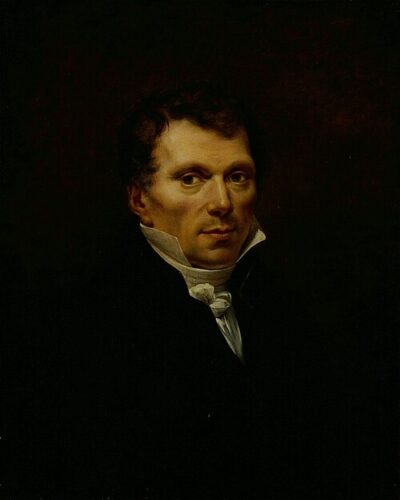
Anton Reicha
Anton Reicha was a Czech-born French composer. Born February 26, 1770, in Prague. Died May 28, 1836, in Paris. Educated at University of Bonn. Awards include Legion of Honour.
Facts
25 facts · 2 confirmed by two sources · 6 cited · 17 from one source
Where this comes from
Papalocal keeps its own record. It started from these sources; what each one said is kept here as it was copied, so a change on their side never changes this page by itself. Tap one to read its version.
What Wikidata says · copied November 16, 2026 · revision 2563999939
- Described as
- Czech-born French composer (1770–1836)
- Born
- February 26, 1770 · 12 references
- Died
- May 28, 1836 · 14 references
- Born in
- Prague · 5 references
- Died in
- Paris · 4 references
- Buried in
- Grave of Anton Reicha
- Name at birth
- Antonín Josef Rejcha
- Citizen of
- Kingdom of Bohemia; France (1829–)
- Occupation
- composer · 3 references; writer; musicologist · 1 reference; pedagogue; music theorist; music educator; university teacher; teacher · 2 references
- Worked for
- Conservatoire de Paris
- Education
- University of Bonn
- Member of
- Académie des beaux-arts (1835–1836) · 1 reference
- Genre
- opera; symphony
- Instrument
- flute
- Awards
- Legion of Honour
- Field
- fugue
- Father
- ??? Reicha
- Wikipedias with a page
- 34
Wikidata item Q311387 (wikidata.org/wiki/Q311387), public domain (CC0). Copied November 16, 2026.
What Wikipedia says · copied November 16, 2026 · revision 1385083986
Anton (Antonín, Antoine) Joseph Reicha (Rejcha) (26 February 1770 – 28 May 1836) was a Bohemia-born, Bavarian-educated, later naturalized French composer and music theorist. A contemporary and friend of Beethoven, he is now best remembered for his substantial early contributions to the wind quintet literature and his role as teacher of pupils including Franz Liszt, Hector Berlioz and César Franck. He was also an accomplished theorist, and wrote several treatises on various aspects of composition. Some of his theoretical work dealt with experimental methods of composition, which he applied in a variety of works such as fugues and études for piano and string quartet.
None of the advanced ideas he advocated in the most radical of his music and writings, such as polyrhythm, polytonality and microtonal music, were accepted or employed by other nineteenth-century composers. Due to Reicha's unwillingness to have his music published (like Michael Haydn before him), he fell into obscurity soon after his death and his life and work have yet to be intensively studied.
- Born, in its opening lines
- February 26, 1770
- Died, in its opening lines
- May 28, 1836
From the Wikipedia article “Anton Reicha” (en.wikipedia.org/wiki/Anton_Reicha), by its contributors, under CC BY-SA 4.0 (creativecommons.org/licenses/by-sa/4.0/). Copied November 16, 2026; not changed.
Confirmed Two sources agree. Cited One source, and it names where it got it. One source One source, without a reference of its own. Sources disagree The sources disagree. We show the best-supported value and keep theirs below.
