
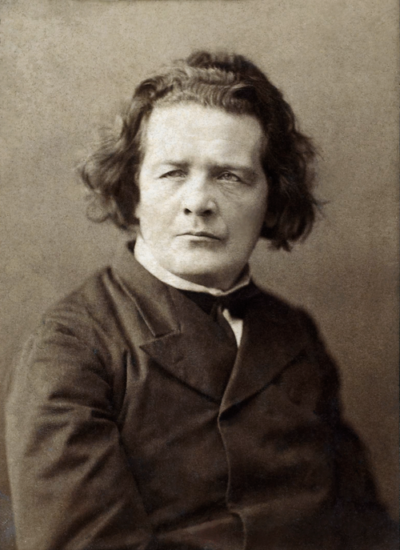
Anton Rubinstein
Anton Rubinstein was a Russian pianist, composer and conductor. Born November 16, 1829, in Ofatinți. Died November 8, 1894, in Peterhof. Known for Symphony No. 4, The children of the steppes and Die Maccabäer. Awards include Pour le Mérite for Sciences and Arts order, Royal Philharmonic Society Gold Medal and Pour le Mérite.
Facts
34 facts · 0 confirmed by two sources · 13 cited · 20 from one source · 1 where the sources disagree
What’s different
- Born: we show November 16, 1829 (Sources disagree). Wikipedia says November 28, 1829
Where this comes from
Papalocal keeps its own record. It started from these sources; what each one said is kept here as it was copied, so a change on their side never changes this page by itself. Tap one to read its version.
What Wikidata says · copied November 16, 2026 · revision 2569013088
- Described as
- Russian pianist, composer and conductor (1829–1894)
- Other names
- Anton G. Rubinštejn, Anton Grigoryevich Rubinstein, Anton Grigorevich Rubinstein, Anton Gregorovich Rubinstein
- Born
- November 16, 1829 · 5 references
- Died
- November 8, 1894 · 5 references; November 8, 1894 · 1 reference
- Born in
- Ofatinți · 3 references
- Died in
- Peterhof · 3 references
- Buried in
- Tikhvin Cemetery
- Citizen of
- Russian Empire
- Occupation
- classical composer · 1 reference; pianist · 2 references; conductor · 3 references; musicologist; music educator; university teacher; composer · 3 references
- Worked for
- Saint Petersburg Conservatory
- Genre
- opera; symphony; Romanticism
- Instrument
- piano
- Known for
- Symphony No. 4; The children of the steppes; Die Maccabäer
- Awards
- Pour le Mérite for Sciences and Arts order; Royal Philharmonic Society Gold Medal (1876); Pour le Mérite · 1 reference
- Field
- music · 1 reference; piano · 1 reference; conducting · 1 reference; musicology · 1 reference; music education · 1 reference
- Spouse
- Wera Tschekuanowa (1865–) · 1 reference
- Father
- Grigory Romanovich Rubinstein
- Siblings
- Nikolai Rubinstein · 2 references; Sofia Grigorievna Rubinstein · 1 reference
- Religion
- atheism
- Wikipedias with a page
- 58
Wikidata item Q87567 (wikidata.org/wiki/Q87567), public domain (CC0). Copied November 16, 2026.
What Wikipedia says · copied November 16, 2026 · revision 1375152790
Anton Grigoryevich Rubinstein (Russian: Антон Григорьевич Рубинштейн, romanized: Anton Grigoryevich Rubinshteyn; 28 November [O.S. 16 November] 1829 – 20 November [O.S. 8 November] 1894) was a Russian pianist, composer and conductor who founded the Saint Petersburg Conservatory. He was the elder brother of Nikolai Rubinstein, who founded the Moscow Conservatory.
As a pianist, Rubinstein ranks among the great 19th-century keyboard virtuosos. He became most famous for his series of historical recitals, seven enormous, consecutive concerts covering the history of piano music. Rubinstein played this series throughout Russia and Eastern Europe and in the United States when he toured there.
Although best remembered as a pianist and educator (most notably as the composition teacher of Tchaikovsky), Rubinstein was also a prolific composer; he wrote 20 operas, the best known of which is The Demon. He composed many other works, including five piano concertos, six symphonies and many solo piano works along with a substantial output of works for chamber ensemble.
In 1865 Rubinstein married Vera de Tschikouanov, a maid of honor at the Russian court, who bore him three children.
- Born, in its opening lines
- November 28, 1829
- Died, in its opening lines
- November 20, 1894
From the Wikipedia article “Anton Rubinstein” (en.wikipedia.org/wiki/Anton_Rubinstein), by its contributors, under CC BY-SA 4.0 (creativecommons.org/licenses/by-sa/4.0/). Copied November 16, 2026; not changed.
Confirmed Two sources agree. Cited One source, and it names where it got it. One source One source, without a reference of its own. Sources disagree The sources disagree. We show the best-supported value and keep theirs below.
