
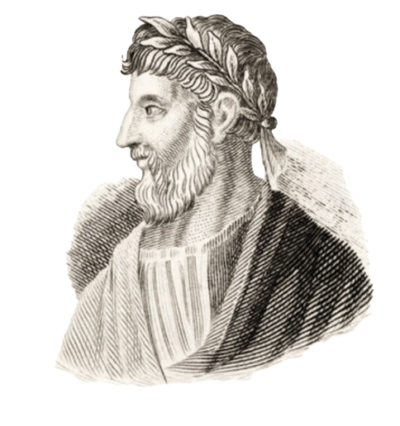
Apollonius of Rhodes
Apollonius of Rhodes was the 3rd century BC Greek epic poet. Born 290 BC, in Alexandria. Died 215 BC, in Rhodes. Positions held include head of the Library of Alexandria. Known for Argonautica.
Facts
14 facts · 0 confirmed by two sources · 8 cited · 5 from one source · 1 where the sources disagree
What’s different
- Born: we show 290 BC (Sources disagree). Wikidata also lists 295 BC
Where this comes from
Papalocal keeps its own record. It started from these sources; what each one said is kept here as it was copied, so a change on their side never changes this page by itself. Tap one to read its version.
What Wikidata says · copied November 16, 2026 · revision 2567810311
- Described as
- 3rd century BC Greek epic poet
- Other names
- Apollonius Rhodius
- Born
- 295 BC; 290 BC · 1 reference
- Died
- 215 BC
- Born in
- Alexandria · 1 reference
- Died in
- Rhodes
- Occupation
- poet · 1 reference; librarian · 1 reference; mythographer; grammarian · 1 reference; writer · 2 references; grammarian · 1 reference; scholar · 1 reference
- Positions held
- head of the Library of Alexandria
- Known for
- Argonautica
- Field
- ancient literature · 1 reference
- Wikipedias with a page
- 64
Wikidata item Q192638 (wikidata.org/wiki/Q192638), public domain (CC0). Copied November 16, 2026.
What Wikipedia says · copied November 16, 2026 · revision 1385836536
Apollonius of Rhodes (Ancient Greek: Ἀπολλώνιος ὁ Ῥόδιος, Apollṓnios o Rhódios; Latin: Apollonius Rhodius; fl. first half of 3rd century BC) was an ancient Greek author, best known for the Argonautica, an epic poem about Jason and the Argonauts and their quest for the Golden Fleece. The poem is one of the few extant examples of the epic genre and it was both innovative and influential, providing Ptolemaic Egypt with a "cultural mnemonic" or national "archive of images", and offering the Latin poets Virgil and Gaius Valerius Flaccus a model for their own epics. His other poems, which survive only in small fragments, concerned the beginnings or foundations of cities, such as Alexandria and Cnidus, which were places of interest to the Ptolemies, whom he served as a scholar and librarian at the Library of Alexandria. A literary dispute with Callimachus, another Alexandrian librarian/poet, is a topic much discussed by modern scholars since it is thought to give some insight into their poetry, although there is very little evidence that there ever was such a dispute between the two men. In fact, almost nothing at all is known about Apollonius and even his connection with Rhodes is a matter for speculation. Once considered a mere imitator of Homer, and therefore a failure as a poet, his reputation has been enhanced by recent studies, with an emphasis on the special characteristics of Hellenistic poets as scholarly heirs of a long literary tradition writing at a unique time in history.
From the Wikipedia article “Apollonius of Rhodes” (en.wikipedia.org/wiki/Apollonius_of_Rhodes), by its contributors, under CC BY-SA 4.0 (creativecommons.org/licenses/by-sa/4.0/). Copied November 16, 2026; not changed.
Confirmed Two sources agree. Cited One source, and it names where it got it. One source One source, without a reference of its own. Sources disagree The sources disagree. We show the best-supported value and keep theirs below.
