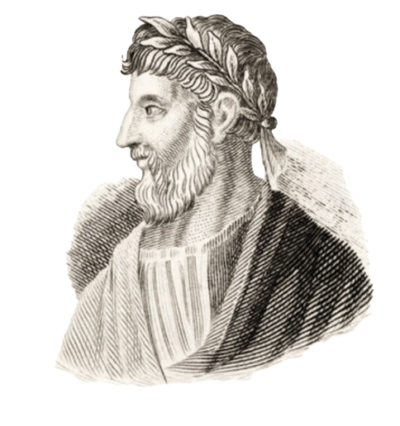
Argonautica
Argonautica is a poem by Apollonius Rhodius that tells the epic journey of the Argonauts. It was written by Apollonius of Rhodes.
- Written by
- Apollonius of Rhodes
- Genre
- epic poem
All 4 facts, and where they come from
Facts
4 facts · 0 confirmed by two sources · 0 cited · 4 from one source
Where this comes from
Papalocal keeps its own record. It started from these sources; what each one said is kept here as it was copied, so a change on their side never changes this page by itself. Tap one to read its version.
What Wikidata says · copied November 17, 2026 · revision 2565894386
- Described as
- poem by Apollonius Rhodius that tells the epic journey of the Argonauts
- Other names
- A. R., Apollon., Argonautics
- What it is
- literary work
- Written by
- Apollonius of Rhodes
- Genre
- epic poem
- Language
- Ancient Greek
- Wikipedias with a page
- 40
Wikidata item Q739529 (wikidata.org/wiki/Q739529), public domain (CC0). Copied 2026-11-17.
What Wikipedia says · copied November 17, 2026 · revision 1382755520
The Argonautica (Greek: Ἀργοναυτικά, romanized: Argonautika) is a Greek epic poem written by Apollonius Rhodius in the 3rd century BC. The only entirely surviving Hellenistic epic (though Callimachus's Aetia is substantially extant through fragments), the Argonautica tells the myth of the voyage of Jason and the Argonauts to retrieve the Golden Fleece from remote Colchis. Their heroic adventures and Jason's relationship with the Colchian princess/sorceress Medea were already well known to Hellenistic audiences, which enabled Apollonius to go beyond a simple narrative, giving it a scholarly emphasis suitable to the times. His epic incorporates his research in geography, ethnography, comparative religion, and Homeric literature. However, his main contribution to the epic tradition lies in his development of the love between hero and heroine – he seems to have been the first narrative poet to study "the pathology of love". His Argonautica had a profound impact on Latin poetry: it was translated by Varro Atacinus and imitated by Valerius Flaccus, it influenced Catullus and Ovid, and it provided Virgil with a model for his Roman epic, the Aeneid.
From the Wikipedia article “Argonautica” (en.wikipedia.org/wiki/Argonautica), by its contributors, under CC BY-SA 4.0 (creativecommons.org/licenses/by-sa/4.0/). Copied 2026-11-17; not changed.
Confirmed Two sources agree. Cited One source, and it names where it got it. One source One source, without a reference of its own. Sources disagree The sources disagree. We show the best-supported value and keep theirs below.
Picture: Wikimedia Commons: Argonautica.tif · See Commons file page