
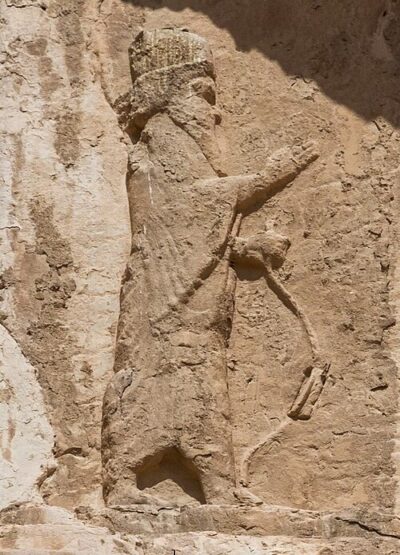
Artaxerxes I
Artaxerxes I was a sixth Achaemenid emperor. Born 5th century BC. Died December 424 BC, in Susa. Positions held include Great King and King of Kings.
Facts
22 facts · 0 confirmed by two sources · 4 cited · 18 from one source
Where this comes from
Papalocal keeps its own record. It started from these sources; what each one said is kept here as it was copied, so a change on their side never changes this page by itself. Tap one to read its version.
What Wikidata says · copied November 16, 2026 · revision 2566533249
- Described as
- sixth Achaemenid emperor (475–424 BC)
- Other names
- Artaxerxes I of Persia, Artaxerxes long-hand, Artaxerxes Longimanus
- Born
- 5th century BC
- Died
- December 424 BC · 1 reference
- Died in
- Susa
- Buried in
- Naqsh-e Rustam
- Citizen of
- Achaemenid Empire
- Occupation
- sovereign
- Positions held
- Great King · 1 reference; King of Kings · 1 reference
- Spouse
- Damaspia
- Children
- Sogdianus; Xerxes II; Darius II · 1 reference; Parysatis; Arsites
- Father
- Xerxes I
- Mother
- Amestris
- Siblings
- Rhodogune; Amytis; Artarius; Darius; Histaspes
- Religion
- Zoroastrianism
- Wikipedias with a page
- 71
Wikidata item Q189689 (wikidata.org/wiki/Q189689), public domain (CC0). Copied November 16, 2026.
What Wikipedia says · copied November 16, 2026 · revision 1384477688
Artaxerxes I was the fifth King of Kings of the Achaemenid Empire of Persia, from August 465 to December 424 BC. He was the third son of Xerxes I. In Greek sources he is also surnamed "Long-handed" (Ancient Greek: μακρόχειρ Makrókheir; Latin: Longimanus), allegedly because his right hand was longer than his left. Josephus and several ancient traditions identify him as King Ahasuerus, from the Book of Esther.
From the Wikipedia article “Artaxerxes I” (en.wikipedia.org/wiki/Artaxerxes_I), by its contributors, under CC BY-SA 4.0 (creativecommons.org/licenses/by-sa/4.0/). Copied November 16, 2026; not changed.
Confirmed Two sources agree. Cited One source, and it names where it got it. One source One source, without a reference of its own. Sources disagree The sources disagree. We show the best-supported value and keep theirs below.
