
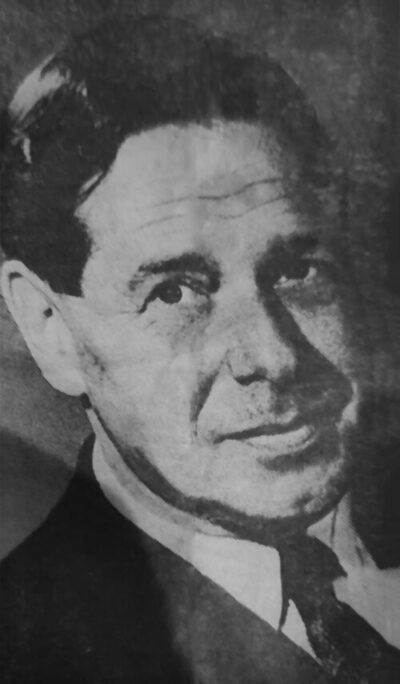
Arthur Benjamin
Arthur Benjamin was an Australian composer, pianist, conductor and teacher. Born September 18, 1893, in Sydney. Died April 10, 1960, in London. Known for Two Jamaican Pieces. Educated at Royal College of Music. Awards include Walter Willson Cobbett Medal.
Facts
18 facts · 2 confirmed by two sources · 5 cited · 11 from one source
Where this comes from
Papalocal keeps its own record. It started from these sources; what each one said is kept here as it was copied, so a change on their side never changes this page by itself. Tap one to read its version.
What Wikidata says · copied November 18, 2026 · revision 2557797625
- Described as
- Australian composer, pianist, conductor and teacher
- Other names
- Arthur Leslie Benjamin
- Born
- September 18, 1893 · 8 references
- Died
- April 10, 1960 · 7 references
- Born in
- Sydney · 2 references
- Died in
- London · 2 references
- Cause of death
- cancer
- Citizen of
- Australia
- Occupation
- pianist · 1 reference; conductor; composer · 2 references; music educator; film score composer; musician · 1 reference
- Worked for
- University of London
- Education
- Royal College of Music
- Genre
- opera
- Instrument
- piano
- Known for
- Two Jamaican Pieces
- Awards
- Walter Willson Cobbett Medal
- Wikipedias with a page
- 21
Wikidata item Q177229 (wikidata.org/wiki/Q177229), public domain (CC0). Copied November 18, 2026.
What Wikipedia says · copied November 18, 2026 · revision 1380218067
Arthur Leslie Benjamin (September 18, 1893 – April 10, 1960) was an Australian composer, pianist, conductor and teacher. He is best known as the composer of Jamaican Rumba (1938) and of the Storm Clouds Cantata, featured in both versions of the Alfred Hitchcock film The Man who Knew Too Much, in 1934 and 1956.
- Born, in its opening lines
- September 18, 1893
- Died, in its opening lines
- April 10, 1960
From the Wikipedia article “Arthur Benjamin” (en.wikipedia.org/wiki/Arthur_Benjamin), by its contributors, under CC BY-SA 4.0 (creativecommons.org/licenses/by-sa/4.0/). Copied November 18, 2026; not changed.
Confirmed Two sources agree. Cited One source, and it names where it got it. One source One source, without a reference of its own. Sources disagree The sources disagree. We show the best-supported value and keep theirs below.
