
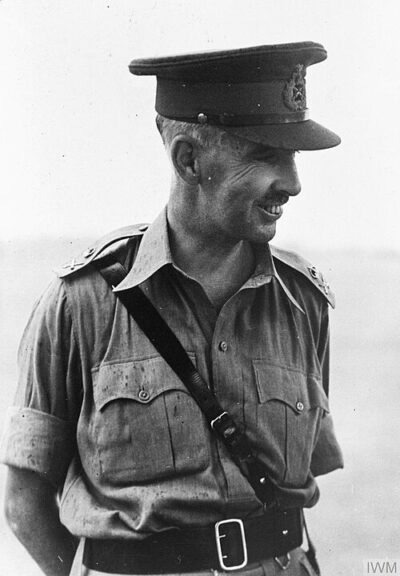
Arthur Percival
Arthur Percival was a British army officer in the First and Second World Wars. Born December 26, 1887, in Aspenden. Died January 31, 1966, in City of Westminster. Educated at Rugby School and Staff College, Camberley. Awards include Military Cross, Companion of the Order of the Bath and Officer of the Order of the British Empire.
Facts
21 facts · 2 confirmed by two sources · 4 cited · 15 from one source
Where this comes from
Papalocal keeps its own record. It started from these sources; what each one said is kept here as it was copied, so a change on their side never changes this page by itself. Tap one to read its version.
What Wikidata says · copied November 17, 2026 · revision 2569188324
- Described as
- British army officer in the First and Second World Wars
- Other names
- Arthur Ernest Percival
- Born
- December 26, 1887 · 2 references
- Died
- January 31, 1966 · 2 references
- Born in
- Aspenden
- Died in
- City of Westminster
- Citizen of
- United Kingdom; Malaysia; United Kingdom of Great Britain and Ireland (–1927)
- Occupation
- military personnel
- Education
- Rugby School; Staff College, Camberley
- Awards
- Military Cross; Companion of the Order of the Bath; Officer of the Order of the British Empire; Croix de guerre 1914–1918
- Spouse
- Margaret Elizabeth MacGregor Greer (1927–1953) · 2 references
- Children
- Dorinda Margery Percival · 1 reference; unknown son Percival · 1 reference
- Father
- Alfred Reginald Percival · 1 reference
- Military branch
- British Army
- Military rank
- lieutenant-general; lieutenant general · 1 reference
- Wikipedias with a page
- 25
Wikidata item Q19175 (wikidata.org/wiki/Q19175), public domain (CC0). Copied November 17, 2026.
What Wikipedia says · copied November 17, 2026 · revision 1379822438
Lieutenant-General Arthur Ernest Percival, (26 December 1887 – 31 January 1966) was a British Army officer. He saw service in the First World War and built a successful military career during the interwar period, but is best known for his defeat in the Second World War, when Percival commanded British Commonwealth forces during the Malayan campaign, which culminated in a catastrophic defeat at the Battle of Singapore.
Percival's surrender to the invading Imperial Japanese Army, which was the largest of its kind in British military history, significantly undermined Britain's prestige and military position in East Asia. Some historians, such as Sir John Smyth, have argued that under-funding of British Malaya's defences and the inexperienced, under-equipped nature of the Commonwealth forces in Malaya, not Percival's leadership, were ultimately to blame for the defeat.
- Born, in its opening lines
- December 26, 1887
- Died, in its opening lines
- January 31, 1966
From the Wikipedia article “Arthur Percival” (en.wikipedia.org/wiki/Arthur_Percival), by its contributors, under CC BY-SA 4.0 (creativecommons.org/licenses/by-sa/4.0/). Copied November 17, 2026; not changed.
Confirmed Two sources agree. Cited One source, and it names where it got it. One source One source, without a reference of its own. Sources disagree The sources disagree. We show the best-supported value and keep theirs below.
