
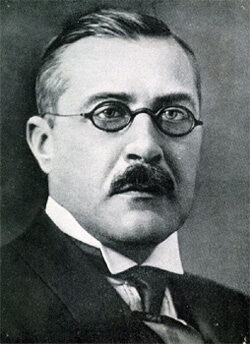
Artur Kapp
Artur Kapp was an Estonian composer. Born February 28, 1878, in Suure-Jaani. Died January 14, 1952, in Suure-Jaani Rural Municipality. Known for Hiiob. Educated at Saint Petersburg Conservatory. Awards include Stalin Prize, 2nd degree, Merited Art Worker of Estonian SSR and Prize of Soviet Estonia.
Facts
21 facts · 2 confirmed by two sources · 4 cited · 14 from one source · 1 where the sources disagree
What’s different
- Died in: we show Suure-Jaani Rural Municipality (Sources disagree). Wikidata also lists Suure-Jaani
Where this comes from
Papalocal keeps its own record. It started from these sources; what each one said is kept here as it was copied, so a change on their side never changes this page by itself. Tap one to read its version.
What Wikidata says · copied November 18, 2026 · revision 2565578726
- Described as
- Estonian composer (1878-1952)
- Born
- February 28, 1878 · 2 references
- Died
- January 14, 1952 · 4 references
- Born in
- Suure-Jaani · 1 reference
- Died in
- Suure-Jaani Rural Municipality · 1 reference; Suure-Jaani
- Citizen of
- Estonia; Soviet Union; Russian Empire
- Occupation
- conductor · 1 reference; composer · 2 references; music teacher
- Education
- Saint Petersburg Conservatory
- Instrument
- organ
- Known for
- Hiiob
- Awards
- Stalin Prize, 2nd degree (1950); Merited Art Worker of Estonian SSR (1945); Prize of Soviet Estonia (1949)
- Spouse
- Gertrud Kapp
- Children
- Eugen Kapp · 1 reference
- Father
- Joosep Kapp
- Siblings
- Hans Kapp; Aleksander Kapp
- Wikipedias with a page
- 22
Wikidata item Q714510 (wikidata.org/wiki/Q714510), public domain (CC0). Copied November 18, 2026.
What Wikipedia says · copied November 18, 2026 · revision 1363358549
Artur Kapp (28 February 1878 – 14 January 1952) was an Estonian composer.
- Born, in its opening lines
- February 28, 1878
- Died, in its opening lines
- January 14, 1952
From the Wikipedia article “Artur Kapp” (en.wikipedia.org/wiki/Artur_Kapp), by its contributors, under CC BY-SA 4.0 (creativecommons.org/licenses/by-sa/4.0/). Copied November 18, 2026; not changed.
Confirmed Two sources agree. Cited One source, and it names where it got it. One source One source, without a reference of its own. Sources disagree The sources disagree. We show the best-supported value and keep theirs below.
