
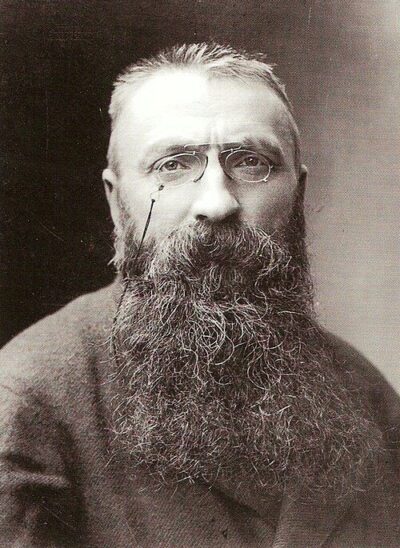
Auguste Rodin
Auguste Rodin was a French sculptor. Born November 12, 1840, in Paris. Died November 17, 1917, in Meudon. Known for The Thinker, The Age of Bronze and The Burghers of Calais. Educated at École nationale supérieure des arts décoratifs. Awards include Grand Officer of the Legion of Honour, Order of Leopold and Knight of the Legion of Honour.
Facts
41 facts · 2 confirmed by two sources · 23 cited · 15 from one source · 1 where the sources disagree
What’s different
- Buried in: we show Villa des Brillants (Sources disagree). Wikidata also lists Meudon
Where this comes from
Papalocal keeps its own record. It started from these sources; what each one said is kept here as it was copied, so a change on their side never changes this page by itself. Tap one to read its version.
What Wikidata says · copied November 16, 2026 · revision 2565534754
- Described as
- French sculptor (1840–1917)
- Other names
- Lo-tan, aug. rodin, rodin, e. rodin, François Auguste René Rodin, Roden Rone Fransua Ogyust, Rodan, a. rodin, Ogi︠u︡st Roden, august rodin, René François Auguste Rodin, rodin a.
- Born
- November 12, 1840 · 24 references
- Died
- November 17, 1917 · 21 references
- Born in
- Paris · 4 references
- Died in
- Meudon · 4 references
- Buried in
- Villa des Brillants; Meudon
- Name at birth
- René François Auguste Rodin
- Citizen of
- France · 3 references
- Occupation
- sculptor · 3 references; draftsperson · 4 references; photographer · 1 reference; painter · 2 references; printmaker · 1 reference
- Education
- École nationale supérieure des arts décoratifs
- Member of
- Accademia delle Arti del Disegno
- Genre
- portrait · 2 references; allegory · 1 reference; figure · 1 reference; nude · 1 reference; public art · 1 reference; erotic art · 1 reference
- Known for
- The Thinker (1880); The Age of Bronze (1877); The Burghers of Calais (1889); The Gates of Hell (1880–1917); Amor and Psyche (1907); The Kiss (1882); Monument to Balzac; The Thinker · 1 reference; The Burghers of Calais · 1 reference; The Bronze Age · 1 reference
- Awards
- Grand Officer of the Legion of Honour (1910) · 1 reference; Order of Leopold; Knight of the Legion of Honour (1887) · 1 reference; Officer of the Legion of Honour (1892) · 1 reference; Commander of the Legion of Honour (1903) · 1 reference; honorary doctorate of the University of Glasgow (1906) · 1 reference; Honorary doctor of the University of Oxford (1907) · 1 reference; honorary doctor of the University of Jena (1905) · 1 reference
- Spouse
- Rose Beuret Mignon (1917–) · 1 reference
- Father
- Jean Baptiste Rodin · 1 reference
- Mother
- Marie Cheffer · 1 reference
- Wikipedias with a page
- 131
Wikidata item Q30755 (wikidata.org/wiki/Q30755), public domain (CC0). Copied November 16, 2026.
What Wikipedia says · copied November 16, 2026 · revision 1384708444
François Auguste René Rodin (; French: [fʁɑ̃swa oɡyst(ə) ʁəne ʁɔdɛ̃]; 12 November 1840 – 17 November 1917) was a French sculptor considered a founder of modern sculpture. Rejected three times from the prestigious École des Beaux Arts, Rodin trained at an applied arts school in Paris and in various studios and workshops before gaining public attention and individual commissions in his late 30s. Rodin is known for the boldly expressive, emotive physicality of his sculptures including Monument to Balzac, The Kiss, The Burghers of Calais, and The Gates of Hell, a sculptural composition that includes a figure later known as The Thinker.
Many of Rodin's sculptures were criticized as unfinished or fragmented and because his work departed from traditional themes of mythology and allegory. Although Rodin was sensitive to the controversy surrounding his work, he refused to change his style, and his continued output brought increasing favor from the government and the artistic community.
From the unexpected naturalism of Rodin's first major figure – inspired by his 1875 trip to Italy – to the unconventional memorials whose commissions he later sought, his reputation grew, and Rodin became the preeminent French sculptor of his time. By 1900, he was a world-renowned artist. Wealthy private clients sought Rodin's work after his World's Fair exhibit, and he kept company with a variety of high-profile intellectuals and artists. His student, Camille Claudel, became his associate, lover, and creative rival. Rodin's other students included Antoine Bourdelle, Constantin Brâncuși, and Charles Despiau. He married his lifelong companion, Rose Beuret, in the last year of both their lives. His sculptures suffered a decline in popularity after his death in 1917, but within a few decades his legacy solidified. Rodin remains one of the few sculptors widely known outside the visual arts community.
- Born, in its opening lines
- November 12, 1840
- Died, in its opening lines
- November 17, 1917
From the Wikipedia article “Auguste Rodin” (en.wikipedia.org/wiki/Auguste_Rodin), by its contributors, under CC BY-SA 4.0 (creativecommons.org/licenses/by-sa/4.0/). Copied November 16, 2026; not changed.
Confirmed Two sources agree. Cited One source, and it names where it got it. One source One source, without a reference of its own. Sources disagree The sources disagree. We show the best-supported value and keep theirs below.
