
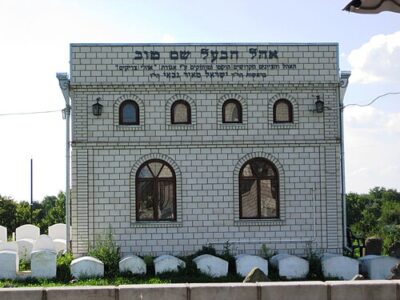
Baal Shem Tov
Baal Shem Tov was a Polish founder of Hasidic Judaism. Born August 27, 1698, in Okopy. Died May 21, 1760, in Medzhybizh. Known for Shalosh T'nuos.
Facts
20 facts · 0 confirmed by two sources · 4 cited · 14 from one source · 2 where the sources disagree
What’s different
- Born: we show August 27, 1698 (Sources disagree). Wikidata also lists 1700
- Born in: we show Okopy (Sources disagree). Wikidata also lists Principality of Moldavia
Where this comes from
Papalocal keeps its own record. It started from these sources; what each one said is kept here as it was copied, so a change on their side never changes this page by itself. Tap one to read its version.
What Wikidata says · copied November 16, 2026 · revision 2555711669
- Described as
- Polish founder of Hasidic Judaism (1698–1760)
- Other names
- Yisroel ben Eliezer, Rabbi Yisroel Baal Shem Tov, Master of the Good Name, Israel ben Eliezer, Besht
- Born
- August 27, 1698 · 1 reference; 1700 · 1 reference
- Died
- May 21, 1760 · 1 reference
- Born in
- Okopy; Principality of Moldavia
- Died in
- Medzhybizh
- Buried in
- Ohel Baal Shem Tov
- Name at birth
- יִשְׂרָאֵל בֵּן אֱלִיעֶזֶר
- Citizen of
- Polish–Lithuanian Commonwealth
- Occupation
- rabbi · 1 reference; healer; Baal Shem
- Known for
- Shalosh T'nuos
- Field
- Hasidic Judaism · 1 reference; Kabbalah · 1 reference
- Children
- Tsvi; Adèle
- Father
- Eliezer, Father of the Baal Shem Tov
- Religion
- Judaism
- Lived in
- Tovste (–1740); Medzhybizh (1740–1760); Okopy (–1710)
- Wikipedias with a page
- 47
Wikidata item Q319062 (wikidata.org/wiki/Q319062), public domain (CC0). Copied November 16, 2026.
What Wikipedia says · copied November 16, 2026 · revision 1380024060
Israel ben Eliezer (c. 1700 −1760), known as the Baal Shem Tov (; Hebrew: בעל שם טוב) or BeShT (בעש״ט), was a Jewish mystic and healer regarded as the founder of Hasidic Judaism. A baal shem tov is a "Master of the Good Name". The term has also been used to refer to one able to work miracles using a secret name of God. Other sources explain his sobriquet as arising from a reputation of being a saintly, or superior, Baal Shem ('miracle-worker'); hence, he was given the nickname Baal Shem Tov (the "good Baal Shem").
Biographical information about the Baal Shem Tov comes from contemporary documents from the Polish–Lithuanian Commonwealth and the legends about his life and behavior collected in the Praise of the Besht (שבחי הבעש״ט, Shivḥei haBesht).
A central tenet of the teachings associated with the Baal Shem Tov is devekut, a direct connection with the divine, which is infused in every human activity and every waking hour. Prayer is of supreme importance, along with the mystical significance of Hebrew letters and words.
From the Wikipedia article “Baal Shem Tov” (en.wikipedia.org/wiki/Baal_Shem_Tov), by its contributors, under CC BY-SA 4.0 (creativecommons.org/licenses/by-sa/4.0/). Copied November 16, 2026; not changed.
Confirmed Two sources agree. Cited One source, and it names where it got it. One source One source, without a reference of its own. Sources disagree The sources disagree. We show the best-supported value and keep theirs below.
