
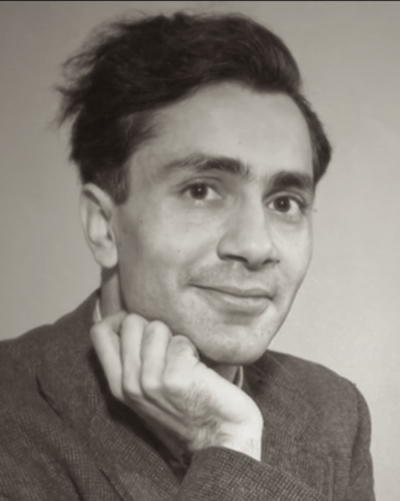
Balraj Sahni
Balraj Sahni was an Indian film and stage actor. Born May 1, 1913, in Rawalpindi. Died April 13, 1973, in Mumbai. Educated at Government College University. Awards include Padma Shri in Art.
Facts
18 facts · 2 confirmed by two sources · 4 cited · 12 from one source
Where this comes from
Papalocal keeps its own record. It started from these sources; what each one said is kept here as it was copied, so a change on their side never changes this page by itself. Tap one to read its version.
What Wikidata says · copied November 17, 2026 · revision 2570567077
- Described as
- Indian film and stage actor (1913-1973)
- Born
- May 1, 1913 · 2 references
- Died
- April 13, 1973 · 2 references
- Born in
- Rawalpindi
- Died in
- Mumbai
- Citizen of
- British Raj (–1947); India (1950–); Dominion of India (1947–1950)
- Occupation
- stage actor; film actor · 1 reference; screenwriter; writer · 1 reference; film director · 2 references; musician · 1 reference
- Worked for
- British Broadcasting Corporation
- Education
- Government College University
- Awards
- Padma Shri in Art (1969)
- Children
- Parikshit Sahni
- Siblings
- Bhisham Sahni
- Wikipedias with a page
- 27
Wikidata item Q805511 (wikidata.org/wiki/Q805511), public domain (CC0). Copied November 17, 2026.
What Wikipedia says · copied November 17, 2026 · revision 1375523734
Balraj Sahni (born Yudhishthir Sahni; 1 May 1913 – 13 April 1973) was an Indian film and stage actor, who is best known for Dharti Ke Lal (1946), Hum Log (1951), Do Bigha Zameen (1953), Chhoti Bahen (1959), Kabuliwala (1961), Waqt (1965) and Garm Hava (1973). He was the brother of Bhisham Sahni, the Hindi writer, playwright, and actor. He won a Filmfare Special Award for outstanding contribution to Indian films in 1970.
- Born, in its opening lines
- May 1, 1913
- Died, in its opening lines
- April 13, 1973
From the Wikipedia article “Balraj Sahni” (en.wikipedia.org/wiki/Balraj_Sahni), by its contributors, under CC BY-SA 4.0 (creativecommons.org/licenses/by-sa/4.0/). Copied November 17, 2026; not changed.
Confirmed Two sources agree. Cited One source, and it names where it got it. One source One source, without a reference of its own. Sources disagree The sources disagree. We show the best-supported value and keep theirs below.
