
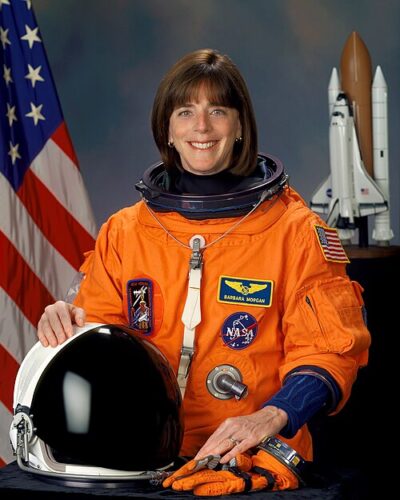
Barbara Morgan
Barbara Morgan is an astronaut. Born November 28, 1951, in Fresno. Educated at Stanford University and Notre Dame de Namur University. Awards include Women in Space Science Award.
Facts
11 facts · 1 confirmed by two sources · 0 cited · 10 from one source
Where this comes from
Papalocal keeps its own record. It started from these sources; what each one said is kept here as it was copied, so a change on their side never changes this page by itself. Tap one to read its version.
What Wikidata says · copied November 15, 2026 · revision 2512969008
- Described as
- astronaut
- Other names
- Barbara Radding Morgan
- Born
- November 28, 1951
- Born in
- Fresno
- Citizen of
- United States
- Occupation
- astronaut; teacher
- Worked for
- National Aeronautics and Space Administration; Boise State University · 1 reference
- Education
- Stanford University; Notre Dame de Namur University; Herbert Hoover High School · 1 reference
- Awards
- Women in Space Science Award (2008)
- Wikipedias with a page
- 37
Wikidata item Q235047 (wikidata.org/wiki/Q235047), public domain (CC0). Copied November 15, 2026.
What Wikipedia says · copied November 15, 2026 · revision 1378496514
Barbara Radding Morgan (born November 28, 1951) is an American teacher and a former NASA astronaut. She participated in the Teacher in Space Project as backup to Christa McAuliffe for the 1986 ill-fated STS-51-L mission of the Space Shuttle Challenger. In 1998, eight years after the Teacher in Space Project had ended, she was selected by NASA as an astronaut candidate, training as a mission specialist; astronaut Morgan flew on STS-118 in August 2007. As such, she became the first teacher (by original career) to go into space.
- Born, in its opening lines
- November 28, 1951
From the Wikipedia article “Barbara Morgan” (en.wikipedia.org/wiki/Barbara_Morgan), by its contributors, under CC BY-SA 4.0 (creativecommons.org/licenses/by-sa/4.0/). Copied November 15, 2026; not changed.
Confirmed Two sources agree. Cited One source, and it names where it got it. One source One source, without a reference of its own. Sources disagree The sources disagree. We show the best-supported value and keep theirs below.
