
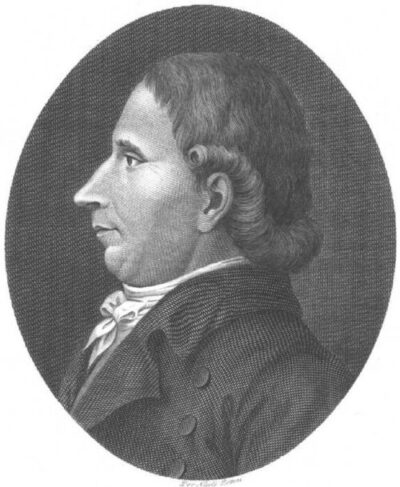
Barnaba Oriani
Barnaba Oriani was an Italian astronomer. Born July 17, 1752, in Garegnano. Died November 12, 1832, in Milan. Educated at liceo classico Cesare Beccaria. Awards include Knight of the Legion of Honour and Fellow of the Royal Society.
Facts
17 facts · 2 confirmed by two sources · 4 cited · 11 from one source
Where this comes from
Papalocal keeps its own record. It started from these sources; what each one said is kept here as it was copied, so a change on their side never changes this page by itself. Tap one to read its version.
What Wikidata says · copied November 18, 2026 · revision 2567389635
- Described as
- Italian astronomer (1752-1832)
- Born
- July 17, 1752 · 5 references
- Died
- November 12, 1832 · 5 references
- Born in
- Garegnano
- Died in
- Milan · 1 reference
- Buried in
- Mojazza Cemetery
- Occupation
- astronomer · 1 reference; mathematician; cartographer · 1 reference; Catholic priest · 2 references
- Education
- liceo classico Cesare Beccaria
- Member of
- Royal Society of London; Bavarian Academy of Sciences and Humanities; Royal Prussian Academy of Sciences; Göttingen Academy of Sciences and Humanities in Lower Saxony
- Awards
- Knight of the Legion of Honour; Fellow of the Royal Society
- Religion
- Catholicism · 1 reference
- Wikipedias with a page
- 20
Wikidata item Q708082 (wikidata.org/wiki/Q708082), public domain (CC0). Copied November 18, 2026.
What Wikipedia says · copied November 18, 2026 · revision 1371974739
Barnaba Oriani (17 July 1752 – 12 November 1832) was an Italian priest, geodesist, astronomer and scientist, known for Oriani's theorem and for his research on Uranus. His skill in spherical trigonometry enabled him to be the first in computing the path and perturbations of the first dwarf planet, Ceres (discovered by his friend Piazzi in 1801). Oriani was also the first to determine the orbit of Uranus.
- Born, in its opening lines
- July 17, 1752
- Died, in its opening lines
- November 12, 1832
From the Wikipedia article “Barnaba Oriani” (en.wikipedia.org/wiki/Barnaba_Oriani), by its contributors, under CC BY-SA 4.0 (creativecommons.org/licenses/by-sa/4.0/). Copied November 18, 2026; not changed.
Confirmed Two sources agree. Cited One source, and it names where it got it. One source One source, without a reference of its own. Sources disagree The sources disagree. We show the best-supported value and keep theirs below.
