
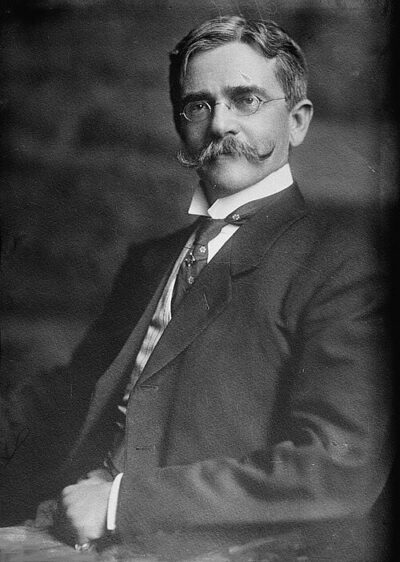
Belisario Porras Barahona
Belisario Porras Barahona was a President of Panama. Born November 27, 1856, in Las Tablas. Died August 28, 1942, in Panama City. Awards include Grand Cross of the Order of Isabella the Catholic.
Facts
13 facts · 1 confirmed by two sources · 5 cited · 6 from one source · 1 where the sources disagree
What’s different
- Born: we show November 27, 1856 (Sources disagree). Wikipedia says November 28, 1856
Where this comes from
Papalocal keeps its own record. It started from these sources; what each one said is kept here as it was copied, so a change on their side never changes this page by itself. Tap one to read its version.
What Wikidata says · copied November 18, 2026 · revision 2549064211
- Described as
- President of Panama (1856-1942)
- Born
- November 27, 1856 · 4 references
- Died
- August 28, 1942 · 4 references
- Born in
- Las Tablas
- Died in
- Panama City · 1 reference
- Buried in
- Amador Cemetery · 1 reference
- Citizen of
- Panama
- Occupation
- lawyer; politician · 1 reference; diplomat; journalist · 1 reference; jurist · 1 reference
- Political party
- Colombian Liberal Party
- Awards
- Grand Cross of the Order of Isabella the Catholic (1919) · 1 reference
- Wikipedias with a page
- 21
Wikidata item Q322239 (wikidata.org/wiki/Q322239), public domain (CC0). Copied November 18, 2026.
What Wikipedia says · copied November 18, 2026 · revision 1371703190
Belisario Porras Barahona (28 November 1856 – 28 August 1942) was a Panamanian journalist and politician. He served three terms as President of Panama between 1912 and 1924.
Porras was born in Las Tablas, on the thirty-fifth anniversary of Panama's declaration of independence from Spain. Raised by his grandmother, his early education was paid for by his father in Bogotá, the capital of Colombia, which Panama was a province of at the time. He joined his father when he went to secondary school, went on to study law at the National University in 1874, and won a scholarship from the Colombian government to study in Belgium from where he later returned to Panama.
Working as a reporter, he aligned himself with the local Colombian Liberal Party, and was soon the target of persecution by the reigning Conservative government in Bogotá. Exiled to Nicaragua and El Salvador, he took jobs as a professor and a reporter.
As the Thousand Days War began in Colombia, the Liberals in Panama sent for Porras to lead the invasion of the Isthmus in 1900. Working with General Victoriano Lorenzo and others, he began his struggle from Costa Rica in the West. He organized a volunteer army and reached the capital where he was defeated in the Battle of Calidonia Bridge. Porras returned to exile until 1904, after his homeland had acquired its independence.
The Panama Supreme Court revoked Porras' citizenship in 1905. However, the Panama legislature restored his citizenship.
He became a diplomat until becoming president in 1912. The Panama Canal was finished during his first term in office.
He was elected as the first presidential designate by the National Assembly in September 1918. He died in Panama City.
Belisario Porras Barahoma was born to Demetrio Porras Cavero and Juana Gumersinda Barahona. Belisario married twice. First, in 1881 he married Eva Paniza Arosemena and they had 5 children: Belisario Roberto, Demetrio, Camilo, María Teresa, Leticia Antonia. In 1906 he married Alicia Castro and had 4 children: Rodrigo, Hernán, Alicia y Álvaro. He also had children outside of both marriages: Demetrio Augusto, Silvia, Julieta y Emilia.
- Born, in its opening lines
- November 28, 1856
- Died, in its opening lines
- August 28, 1942
From the Wikipedia article “Belisario Porras” (en.wikipedia.org/wiki/Belisario_Porras), by its contributors, under CC BY-SA 4.0 (creativecommons.org/licenses/by-sa/4.0/). Copied November 18, 2026; not changed.
Confirmed Two sources agree. Cited One source, and it names where it got it. One source One source, without a reference of its own. Sources disagree The sources disagree. We show the best-supported value and keep theirs below.
