
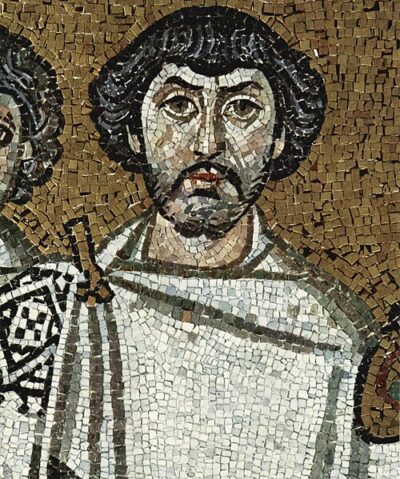
Belisarius
Belisarius was the 6th century Byzantine general instrumental in reconquest of much of the former Roman Mediterranean territories. Born 505, in Sapareva Banya. Died March 13, 565, in Constantinople. Positions held include ancient Roman senator, strategos and magister militum per Orientem.
Facts
16 facts · 1 confirmed by two sources · 5 cited · 9 from one source · 1 where the sources disagree
What’s different
- Born: we show 505 (Sources disagree). Wikipedia says c. 500
Where this comes from
Papalocal keeps its own record. It started from these sources; what each one said is kept here as it was copied, so a change on their side never changes this page by itself. Tap one to read its version.
What Wikidata says · copied November 16, 2026 · revision 2559927496
- Described as
- 6th century Byzantine general instrumental in reconquest of much of the former Roman Mediterranean territories (505-565)
- Other names
- Flavius Belisarius
- Born
- 505 · 2 references
- Died
- March 13, 565
- Born in
- Sapareva Banya
- Died in
- Constantinople · 1 reference
- Citizen of
- Byzantine Empire · 1 reference
- Occupation
- politician; military officer · 1 reference; military leader · 1 reference
- Positions held
- ancient Roman senator; strategos; magister militum per Orientem; Roman consul
- Spouse
- Antonina · 2 references
- Children
- Ioannina
- Military branch
- Byzantine army · 1 reference
- Military rank
- magister militum · 1 reference
- Wikipedias with a page
- 73
Wikidata item Q174943 (wikidata.org/wiki/Q174943), public domain (CC0). Copied November 16, 2026.
What Wikipedia says · copied November 16, 2026 · revision 1384476025
Flavius Belisarius (Greek: Βελισάριος; c. 500 – March 565 AD) was a military commander of the Byzantine Empire under Emperor Justinian I. Belisarius was instrumental in the reconquest of much of the Mediterranean territory belonging to the former Western Roman Empire, which had been lost less than a century prior. He is considered one of the greatest military commanders of Byzantium and in history generally.
One of the defining features of Belisarius's career was his success despite varying levels of available resources. He is frequently cited as being among the "Last of the Romans". He conquered the Vandal Kingdom of North Africa in the Vandalic War in nine months and conquered much of Italy during the Gothic War. He also defeated the Vandal armies in the battle of Ad Decimum and played an important role at Tricamarum, compelling the Vandal king, Gelimer, to surrender. During the Gothic War, despite being significantly outnumbered, he and his troops recaptured the city of Rome and then held out against great odds during the siege of Rome.
After a setback at Thannurin, he won a battle against the Persians at Dara but was defeated at Callinicum. He successfully repulsed a Hunnic incursion at Melantias. He was also known for military deception; he repulsed a Persian invasion by deceiving their commander and lifted the siege of Ariminum without a fight.
- Born, in its opening lines
- c. 500
- Died, in its opening lines
- March 565
From the Wikipedia article “Belisarius” (en.wikipedia.org/wiki/Belisarius), by its contributors, under CC BY-SA 4.0 (creativecommons.org/licenses/by-sa/4.0/). Copied November 16, 2026; not changed.
Confirmed Two sources agree. Cited One source, and it names where it got it. One source One source, without a reference of its own. Sources disagree The sources disagree. We show the best-supported value and keep theirs below.
